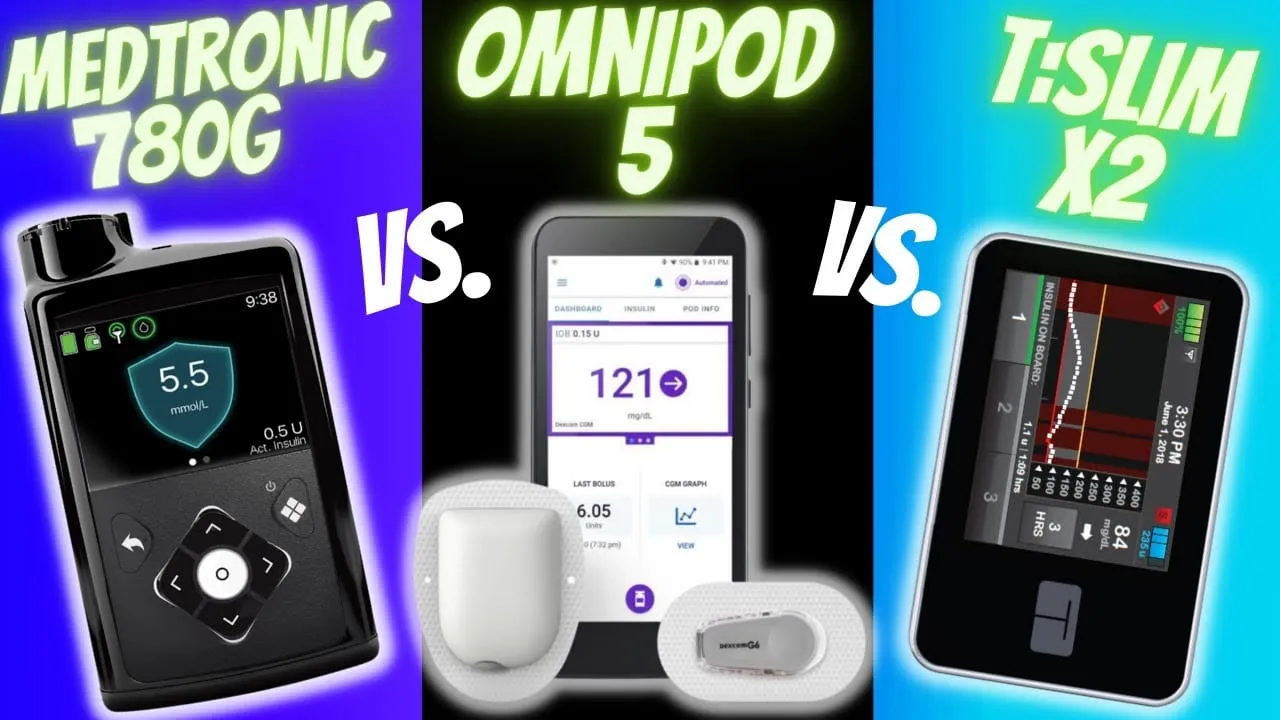
Understanding the CGM Systems Behind Three Popular Insulin Pumps
The Omnipod 5, Tandem t:slim X2, and Medtronic 780G each rely on different continuous glucose monitors. Here's what those differences mean for users.
Evidence label explains the kind of source behind this article (for example peer-reviewed literature vs community video). It is not medical advice.
Key takeaways
- Omnipod 5 and t:slim X2 both use Dexcom sensors (G6 and G7), while Medtronic 780G uses its own Guardian system
- Dexcom sensors last 10 days compared to Guardian 4's 7-day wear time
- Dexcom sensors have a slightly lower Mean Absolute Difference (MAD) score than Guardian 4, indicating comparable accuracy in real-world use
- The choice of CGM system may influence which pump works best for your lifestyle and preferences
Three Pumps, Two Different CGM Approaches
If you're comparing the newest automated insulin pump systems, understanding their continuous glucose monitor (CGM) components is essential. The Omnipod 5 and Tandem t:slim X2 both pair with Dexcom sensors, while the Medtronic 780G uses Medtronic's own Guardian system. This difference shapes the day-to-day experience of using each pump.
Wear Time: A Practical Consideration
One concrete difference between these systems is sensor longevity. Dexcom sensors (both G6 and the newer G7) wear for 10 days before needing replacement. Medtronic's Guardian 4, the latest version of their proprietary system, lasts 7 days. For users who prefer less frequent sensor changes, the longer wear time of Dexcom sensors may be a meaningful advantage in daily life.
Accuracy: How the Sensors Compare
When evaluating sensor accuracy, manufacturers use a measurement called Mean Absolute Difference (MAD)—essentially, how far off a sensor's reading is from a blood glucose reference. Lower MAD scores indicate better accuracy. The Dexcom sensors score a MAD of 9, while the Guardian 4 scores approximately 10.5. Both represent solid real-world accuracy, though the Dexcom sensors show a modest edge in this metric.
Making Your Choice
These technical differences matter most when they fit your actual life. Some people prefer the convenience of 10-day sensors and broader Dexcom compatibility. Others may prioritize Medtronic's integrated ecosystem or have insurance coverage that influences their decision. Discussing these practical factors with your healthcare team can help you find the pump that works best for you.
Evidence label
Source: YouTube community video. Evidence type: Community video — lay discussion, not peer-reviewed research. Type1Cure is an information and intelligence hub, not a medical advice service. This article summarizes published research and does not provide diagnosis, treatment, or personal medical guidance. Always talk to your own care team before changing anything about your Type 1 diabetes management.
Type1Cure is an information and intelligence hub, not a medical advice service. This article summarizes published research and does not provide diagnosis, treatment, or personal medical guidance. Always talk to your own care team before changing anything about your Type 1 diabetes management.
Related reading
More evidence-labeled coverage across the Type1Cure library.
- Living with T1DHow Insulin Pumps Work: Continuous Delivery for Better Blood Sugar ManagementCommunity video — lay discussion, not peer-reviewed research
- Living with T1DToward Smarter Insulin Pumps: Researchers Work to Predict, Not Just React to Blood Sugar ChangesCommunity video — lay discussion, not peer-reviewed research
- Living with T1DWhen Type 1 Is Mistaken for Type 2: One Person's Diagnostic JourneyCommunity video — lay discussion, not peer-reviewed research
- Living with T1DCould You Have Type 1 Instead of Type 2? What to KnowCommunity video — lay discussion, not peer-reviewed research
- Living with T1DWhat to Do When You Run Out of Insulin Between Pod ChangesCommunity video — lay discussion, not peer-reviewed research
- Living with T1DBeta Bionics' Mint Pump: What We Know About This Tubeless Insulin Pump in DevelopmentCommunity video — lay discussion, not peer-reviewed research