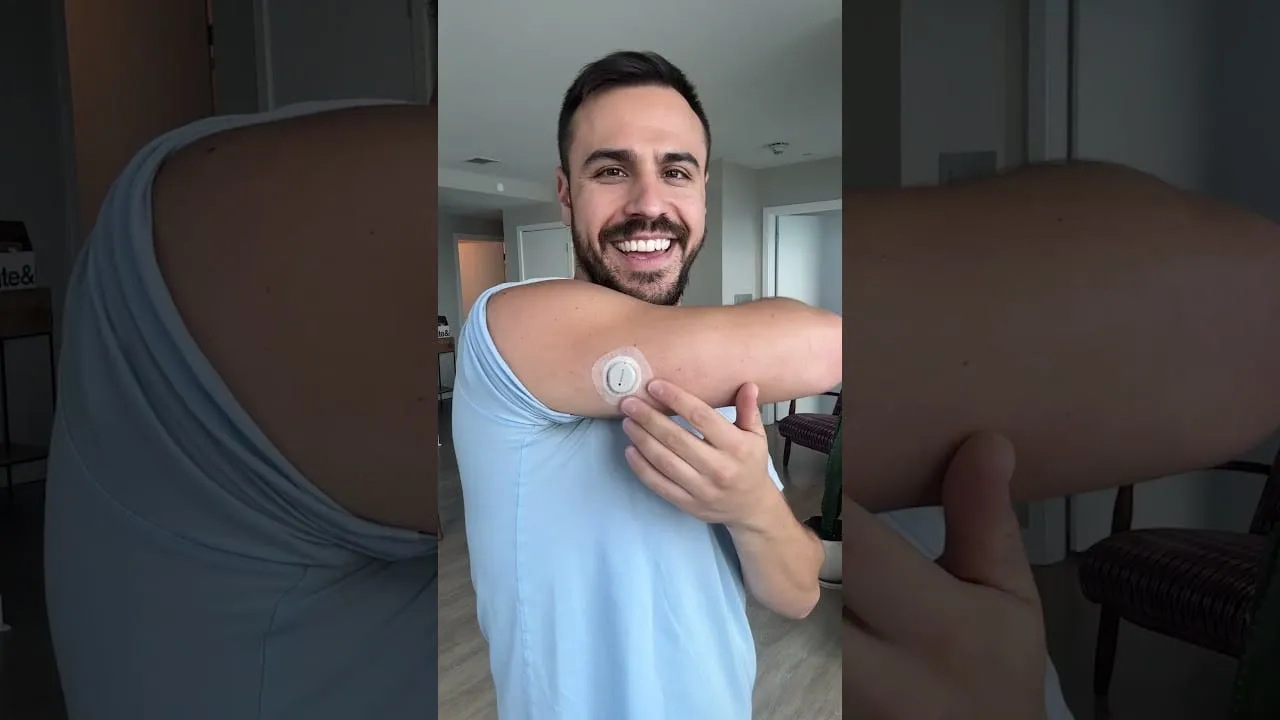
Dexcom G7 Now Works Directly with Omnipod 5 Pump
The integration between Dexcom's smallest sensor yet and the tubeless Omnipod 5 pump is now official, allowing continuous glucose data to flow directly to your insulin pump every 5 minutes.
Evidence label explains the kind of source behind this article (for example peer-reviewed literature vs community video). It is not medical advice.
Key takeaways
- Dexcom G7 sends glucose readings to Omnipod 5 every 5 minutes, allowing the pump to automatically adjust insulin delivery
- The Dexcom G7 has a 30-minute warm-up time and is one of the smallest continuous glucose monitors available
- Omnipod 5 is tubeless, making the combined system easier to wear during daily activities like sports
- You can share glucose data with family and friends via the Dexcom Follow app and view readings on an Apple Watch
What This Integration Means
The Dexcom G7 continuous glucose monitor now integrates directly with the Omnipod 5 insulin pump. This means glucose readings from your sensor are transmitted to your pump automatically every 5 minutes. Based on these readings, Omnipod 5 adjusts your insulin delivery—giving you more or less insulin depending on your glucose levels.
This type of automated connection between a CGM and pump is part of what's sometimes called a "closed-loop" system, where your devices work together to help manage your insulin delivery without constant manual input.
Key Features of the Dexcom G7
The Dexcom G7 is designed to be compact and discreet. It requires only a 30-minute warm-up time before it begins sending readings to your pump, which is faster than many other sensors on the market.
Beyond pump integration, the G7 offers flexibility in how you access your data. You can share glucose readings with family and friends through the Dexcom Follow app, and you can view readings directly on an Apple Watch for quick access throughout your day.
The Tubeless Advantage
Omnipod 5 is a tubeless (or patch) pump, meaning there are no long tubes connecting the pump to your infusion set. When paired with the small Dexcom G7 sensor, the combined system is minimal and easy to wear during activities like sports and exercise.
For many people using this combination, the discrete nature of both devices means diabetes management can fade more into the background of daily life.
Evidence label
Source: YouTube community video. Evidence type: Community video — lay discussion, not peer-reviewed research. Type1Cure is an information and intelligence hub, not a medical advice service. This article summarizes published research and does not provide diagnosis, treatment, or personal medical guidance. Always talk to your own care team before changing anything about your Type 1 diabetes management.
Type1Cure is an information and intelligence hub, not a medical advice service. This article summarizes published research and does not provide diagnosis, treatment, or personal medical guidance. Always talk to your own care team before changing anything about your Type 1 diabetes management.
Related reading
More evidence-labeled coverage across the Type1Cure library.
- Living with T1DHow Insulin Pumps Work: Continuous Delivery for Better Blood Sugar ManagementCommunity video — lay discussion, not peer-reviewed research
- Living with T1DToward Smarter Insulin Pumps: Researchers Work to Predict, Not Just React to Blood Sugar ChangesCommunity video — lay discussion, not peer-reviewed research
- Living with T1DWhen Type 1 Is Mistaken for Type 2: One Person's Diagnostic JourneyCommunity video — lay discussion, not peer-reviewed research
- Living with T1DCould You Have Type 1 Instead of Type 2? What to KnowCommunity video — lay discussion, not peer-reviewed research
- Living with T1DWhat to Do When You Run Out of Insulin Between Pod ChangesCommunity video — lay discussion, not peer-reviewed research
- Living with T1DBeta Bionics' Mint Pump: What We Know About This Tubeless Insulin Pump in DevelopmentCommunity video — lay discussion, not peer-reviewed research