New Pill Being Tested Alongside Insulin Pumps for Type 1 Diabetes
Researchers are studying whether an experimental drug called cadisegliatin could help people using hybrid closed loop insulin pumps improve their blood sugar control. A new clinical trial is recruiting adults to test the approach.
Evidence label explains the kind of source behind this article (for example peer-reviewed literature vs community video). It is not medical advice.
Key takeaways
- Cadisegliatin (TTP399) is an experimental once-daily pill being tested as an add-on to insulin, not as a replacement
- The trial will involve 40 adults with type 1 diabetes who use hybrid closed loop insulin pumps
- Researchers will measure whether the drug helps people spend more time in their target blood sugar range
- The study hasn't started recruiting yet, and no results are available
- This is very early-stage research; the drug is not available outside of clinical trials
What Is Cadisegliatin?
Cadisegliatin, also known as TTP399, is an experimental medication being developed by vTv Therapeutics. It's designed to be taken as a pill once per day. Unlike some diabetes medications that aim to replace insulin, cadisegliatin is being studied specifically as something to take *in addition to* insulin therapy, not instead of it.
How Will the Trial Work?
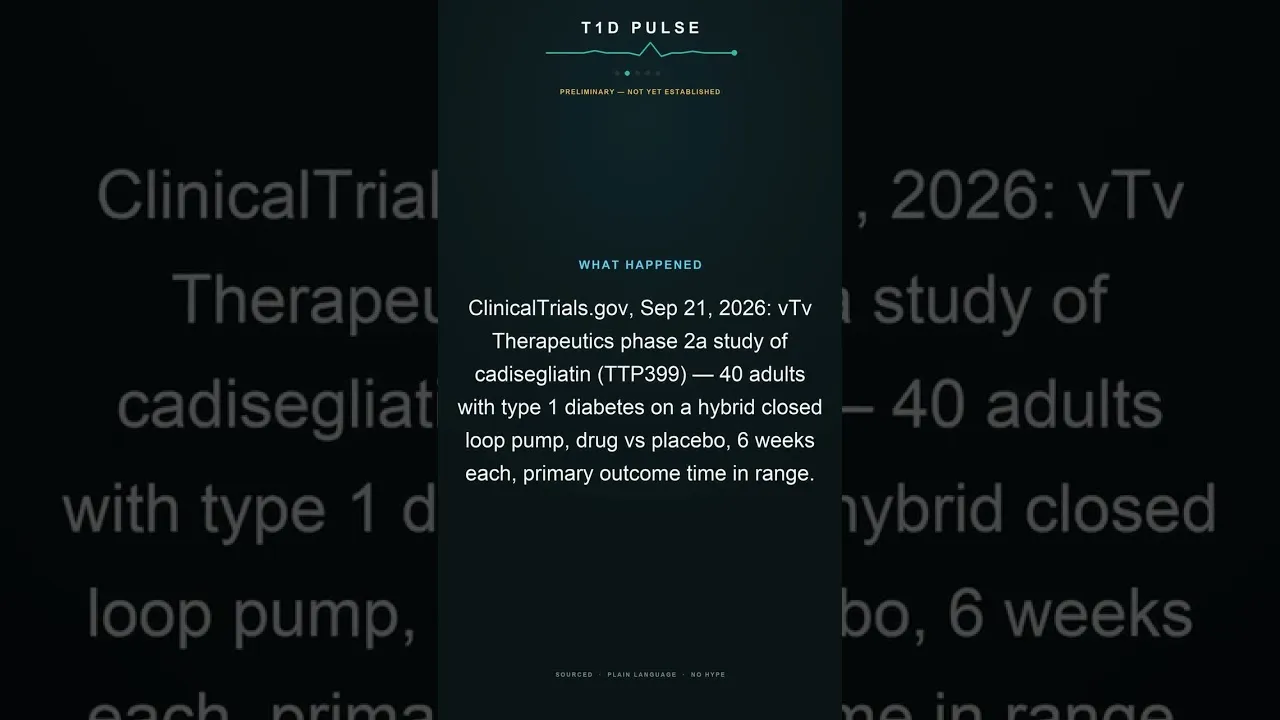
A new phase 2a clinical trial called TTP399-206 has been registered and is recruiting participants. The study will involve 40 adults with type 1 diabetes who use hybrid closed loop insulin pumps—devices that automatically adjust insulin delivery based on blood sugar readings.
Over the course of the trial, participants will take cadisegliatin 800 mg once daily during one six-week period and a matching placebo during another six-week period, with a two-week break between them. This crossover design means each person acts as their own comparison, which can help researchers see the drug's true effect.
Before the main study period, there will be screening and device-training phases lasting one to three weeks total.
What Are Researchers Looking For?
The primary goal of the trial is to measure whether cadisegliatin helps people spend more time in their target blood sugar range—a key indicator of good diabetes control. Researchers will compare results from the cadisegliatin weeks with results from the placebo weeks.
What You Should Know
As of now, the trial is still in the recruitment phase, meaning it has not yet started enrolling participants. No results are available yet.
Cadisegliatin is experimental and is only available to people participating in approved clinical trials. It is not a treatment option outside of research settings.
This is early-stage research. Many experimental drugs tested in humans do not ultimately become approved medications.
If you are interested in learning more about this trial or think you might be eligible to participate, you can visit ClinicalTrials.gov. Always discuss any clinical trial participation with your diabetes care team first.
Evidence label
Origin: T1D Pulse (Video report). Evidence: Video report — unverified, pending corroboration. Type1Cure is an information and intelligence hub, not a medical advice service. This article summarizes published research and does not provide diagnosis, treatment, or personal medical guidance. Always talk to your own care team before changing anything about your Type 1 diabetes management.
Type1Cure is an information and intelligence hub, not a medical advice service. This article summarizes published research and does not provide diagnosis, treatment, or personal medical guidance. Always talk to your own care team before changing anything about your Type 1 diabetes management.
Related reading
More evidence-labeled coverage across the Type1Cure library.
- Diagnosis & Early DetectionUnderstanding the Stages of Type 1 Diabetes: From Invisible to DiagnosisVideo report, corroborated with 3 indexed studies
- Diagnosis & Early DetectionWhy Family Members Should Know About Type 1 Diabetes ScreeningVideo report, corroborated with 5 indexed studies
- Diagnosis & Early DetectionGenetic Screening May Help Identify Type 1 Diabetes in AdultsNews report, corroborated with 3 indexed studies
- Diagnosis & Early DetectionA Simple Blood Test May Help Doctors Assess How Severe Your DKA IsPubMed indexed literature
- Diagnosis & Early DetectionUnderstanding Type 1 Diabetes Screening: What Happens Before DiagnosisVideo report, corroborated with 3 indexed studies
- Diagnosis & Early DetectionA New Approach to Finding Type 1 Diabetes Early: Testing During Routine CheckupsPubMed indexed literature