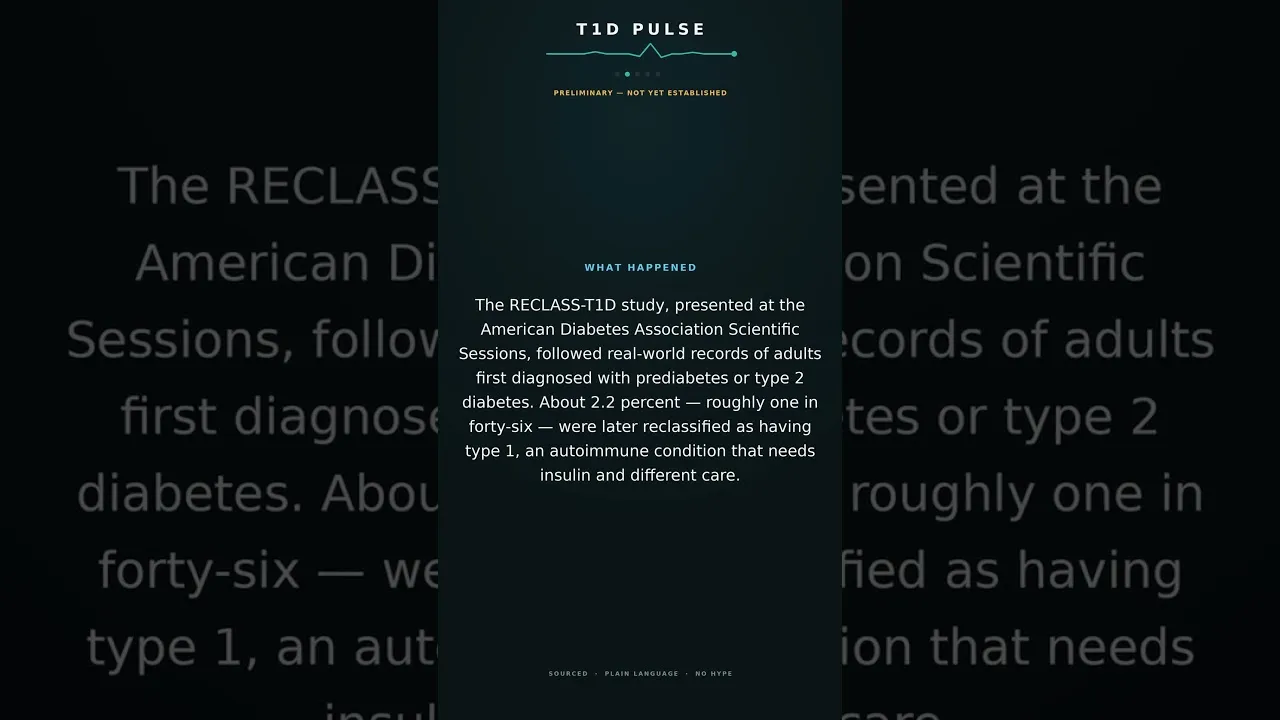
1 in 46 Adults Initially Diagnosed With Type 2 Actually Have Type 1
A new study reveals that some adults receive an incorrect type 2 diagnosis when they actually have type 1 diabetes. Understanding the difference matters because the two conditions require different treatment approaches.
Evidence label explains the kind of source behind this article (for example peer-reviewed literature vs community video). It is not medical advice.
Key takeaways
- About 2.2% of adults first diagnosed with prediabetes or type 2 diabetes were later found to have type 1—roughly 1 in 46 people
- Type 1 diabetes can develop in adulthood, not just in childhood, and may initially look like type 2
- If a type 2 diagnosis isn't responding as expected, antibody testing can help determine if type 1 is the actual diagnosis
- Correct diagnosis is important because type 1 and type 2 require different management strategies
A Misdiagnosis More Common Than Many Realize
A new study presented at the American Diabetes Association Scientific Sessions found that misdiagnosis between type 1 and type 2 diabetes happens more often than previously documented. Researchers analyzed real-world medical records of adults who were initially diagnosed with prediabetes or type 2 diabetes and tracked whether any were later reclassified.
The findings: approximately 2.2% of these patients—or about 1 in 46—were eventually reclassified with a type 1 diagnosis instead. While this percentage may seem small, it represents a significant number of people receiving care based on an incorrect diagnosis.
Type 1 Can Start in Adulthood
Many people think of type 1 diabetes as a childhood condition, but it can develop at any age, including adulthood. When type 1 emerges later in life, it can initially appear similar to type 2, leading to diagnostic confusion.
The key difference: type 1 is an autoimmune condition in which the body's immune system attacks the insulin-producing cells in the pancreas. Type 2 involves insulin resistance and typically develops more gradually. These are fundamentally different diseases requiring different approaches to care.
When to Question Your Diagnosis
If you or a loved one has received a type 2 diagnosis but the condition isn't responding to expected treatment or management approaches, it may be worth discussing antibody testing with your doctor. Antibody tests can identify the autoimmune markers that distinguish type 1 from type 2.
This conversation is especially important if symptoms or blood sugar patterns seem unusual for type 2 diabetes, or if insulin becomes necessary sooner than typically expected. A simple blood test can provide clarity and lead to a treatment plan that actually fits your condition.
What Comes Next
The reclass T1D study data presented at the 2026 ADA Scientific Sessions is currently conference-level evidence. The full peer-reviewed paper is still in preparation and will provide additional details about how and why these misclassifications occur.
As more research emerges on adult-onset type 1 and diagnostic accuracy, awareness among patients and healthcare providers is likely to improve, potentially reducing the number of people living with an incorrect diagnosis.
Evidence label
Origin: YouTube / T1D Pulse (Video report). Evidence: Community video — lay discussion, not peer-reviewed research. Type1Cure is an information and intelligence hub, not a medical advice service. This article summarizes published research and does not provide diagnosis, treatment, or personal medical guidance. Always talk to your own care team before changing anything about your Type 1 diabetes management.
Type1Cure is an information and intelligence hub, not a medical advice service. This article summarizes published research and does not provide diagnosis, treatment, or personal medical guidance. Always talk to your own care team before changing anything about your Type 1 diabetes management.
Related reading
More evidence-labeled coverage across the Type1Cure library.
- Diagnosis & Early DetectionUnderstanding the Stages of Type 1 Diabetes: From Invisible to DiagnosisVideo report, corroborated with 3 indexed studies
- Diagnosis & Early DetectionWhy Family Members Should Know About Type 1 Diabetes ScreeningVideo report, corroborated with 5 indexed studies
- Diagnosis & Early DetectionGenetic Screening May Help Identify Type 1 Diabetes in AdultsNews report, corroborated with 3 indexed studies
- Diagnosis & Early DetectionA Simple Blood Test May Help Doctors Assess How Severe Your DKA IsPubMed indexed literature
- Diagnosis & Early DetectionUnderstanding Type 1 Diabetes Screening: What Happens Before DiagnosisVideo report, corroborated with 3 indexed studies
- Diagnosis & Early DetectionA New Approach to Finding Type 1 Diabetes Early: Testing During Routine CheckupsPubMed indexed literature