Understanding Autoantibodies: How Researchers Detect Type 1 Diabetes Before Symptoms Appear
Type 1 diabetes develops when the immune system mistakenly attacks insulin-producing cells. Autoantibody blood tests can now identify people at risk years before diagnosis, opening doors to early monitoring and emerging treatments.
Evidence label explains the kind of source behind this article (for example peer-reviewed literature vs community video). It is not medical advice.
Key takeaways
- Type 1 diabetes is an autoimmune disease in which the body's immune system attacks its own insulin-producing cells, leading to little or no insulin production.
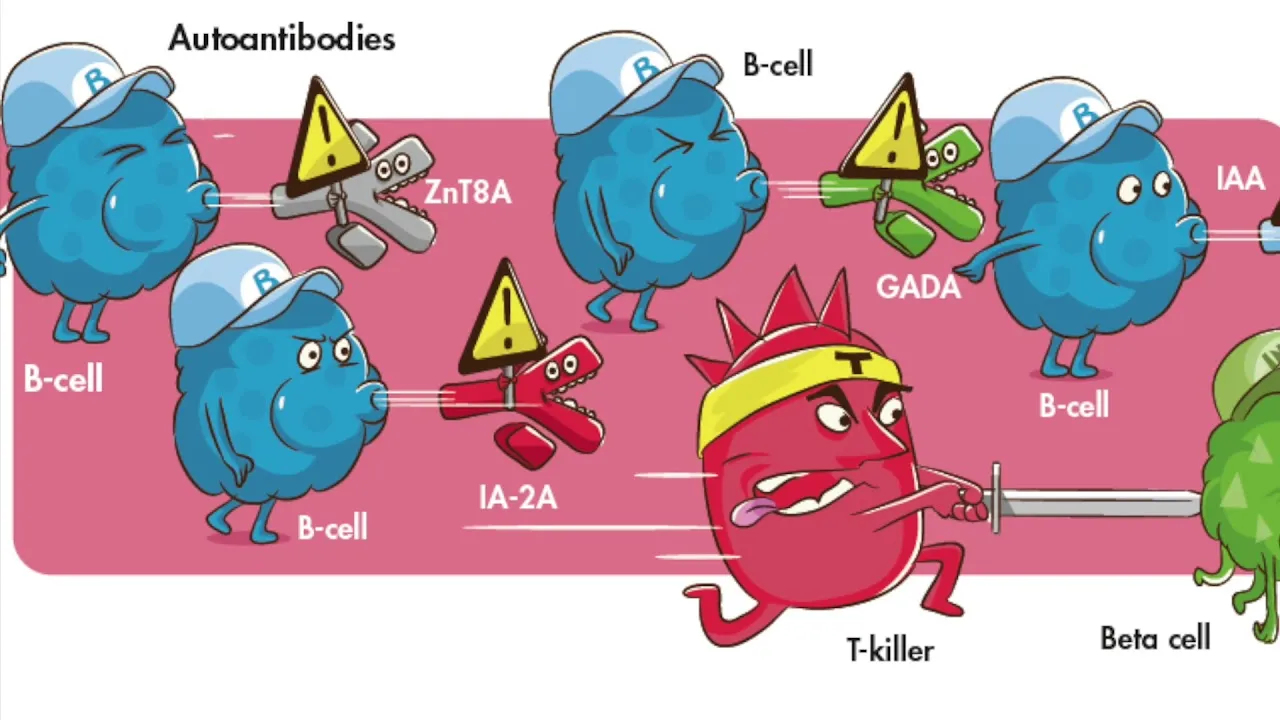
- Autoantibodies are markers in the blood that show the immune system is attacking these insulin-producing cells—often years before symptoms appear.
- Blood tests can identify people with autoantibodies, who are at risk for Type 1 diabetes and may benefit from early monitoring and available therapies.
- Type 1 diabetes can develop at any age, not just in children, though it has traditionally been diagnosed in younger people.
- Early detection through screening programs can help reduce the risk of diabetic ketoacidosis (DKA) at the time of diagnosis and enable access to treatments that may delay disease progression.
What Is Type 1 Diabetes?
Type 1 diabetes is an autoimmune disease. Unlike Type 2 diabetes, which involves insulin resistance, Type 1 occurs when the body's immune system attacks the insulin-producing cells in the pancreas. When enough of these cells are damaged, the body can no longer make the insulin it needs to convert food into energy.
Insulin is essential for survival. People with Type 1 diabetes must take insulin to help their body function properly. While Type 1 diabetes has traditionally been thought of as a childhood disease, it can actually develop at any age.
What Are Autoantibodies and Why Do They Matter?
Autoantibodies are proteins produced by white blood cells when the immune system becomes confused and begins attacking the body's own cells instead of viruses and germs. In Type 1 diabetes, these autoantibodies target the insulin-producing cells in the pancreas.
The presence of autoantibodies in the blood can signal that this autoimmune process is already underway—sometimes years before a person shows any symptoms of diabetes. This discovery has changed how doctors approach Type 1 diabetes: rather than waiting for symptoms, blood tests can now identify people who are at risk.
Early Detection: From Risk to Stage Classification
Researchers have identified different stages of Type 1 diabetes based on autoantibody presence and blood sugar levels. People can have a single autoantibody (lower risk of progression) or multiple autoantibodies (higher risk). Those with multiple autoantibodies and normal blood sugar are considered to have early-stage Type 1 diabetes.
Stage 3 marks the clinical onset of the disease—when blood sugar levels become abnormal and symptoms typically appear. Identifying people in the earlier stages through screening can help prevent or delay the progression to Stage 3.
What Happens After Early Detection?
Once a person is identified as autoantibody-positive through blood tests, ongoing medical monitoring becomes important. This includes regular glucose assessments, education about warning signs (like symptoms of diabetic ketoacidosis), and psychosocial support for individuals and families.
People with autoantibodies, particularly those who are interested, may be offered participation in clinical trials or access to approved therapies designed to delay disease progression. Importantly, early detection and monitoring can significantly reduce the risk of diabetic ketoacidosis at the time of diagnosis—a serious complication that can be life-threatening.
Care often involves partnerships between endocrinologists (diabetes specialists) and primary care providers, since screening programs are identifying increasing numbers of autoantibody-positive individuals who need monitoring and support.
The Future of Type 1 Diabetes Screening
Screening programs are being rolled out more broadly, particularly focusing on first-degree relatives of people with Type 1 diabetes, who have higher risk. Research is also underway to improve how autoantibodies are detected—including testing new methods using capillary blood samples that could eventually be collected at home, making screening more accessible.
These advances in early detection represent a significant shift in Type 1 diabetes care: from identifying the disease only after symptoms appear, to finding it during its earliest autoimmune phases when interventions may help preserve insulin production and delay or prevent diagnosis.
Evidence label
Origin: YouTube / TEDDY Study - Washington (Video report). Evidence: Video report, corroborated with 5 indexed studies. Type1Cure is an information and intelligence hub, not a medical advice service. This article summarizes published research and does not provide diagnosis, treatment, or personal medical guidance. Always talk to your own care team before changing anything about your Type 1 diabetes management.
Type1Cure is an information and intelligence hub, not a medical advice service. This article summarizes published research and does not provide diagnosis, treatment, or personal medical guidance. Always talk to your own care team before changing anything about your Type 1 diabetes management.
Related reading
More evidence-labeled coverage across the Type1Cure library.
- Diagnosis & Early DetectionUnderstanding the Stages of Type 1 Diabetes: From Invisible to DiagnosisVideo report, corroborated with 3 indexed studies
- Diagnosis & Early DetectionWhy Family Members Should Know About Type 1 Diabetes ScreeningVideo report, corroborated with 5 indexed studies
- Diagnosis & Early DetectionGenetic Screening May Help Identify Type 1 Diabetes in AdultsNews report, corroborated with 3 indexed studies
- Diagnosis & Early DetectionA Simple Blood Test May Help Doctors Assess How Severe Your DKA IsPubMed indexed literature
- Diagnosis & Early DetectionUnderstanding Type 1 Diabetes Screening: What Happens Before DiagnosisVideo report, corroborated with 3 indexed studies
- Diagnosis & Early DetectionA New Approach to Finding Type 1 Diabetes Early: Testing During Routine CheckupsPubMed indexed literature