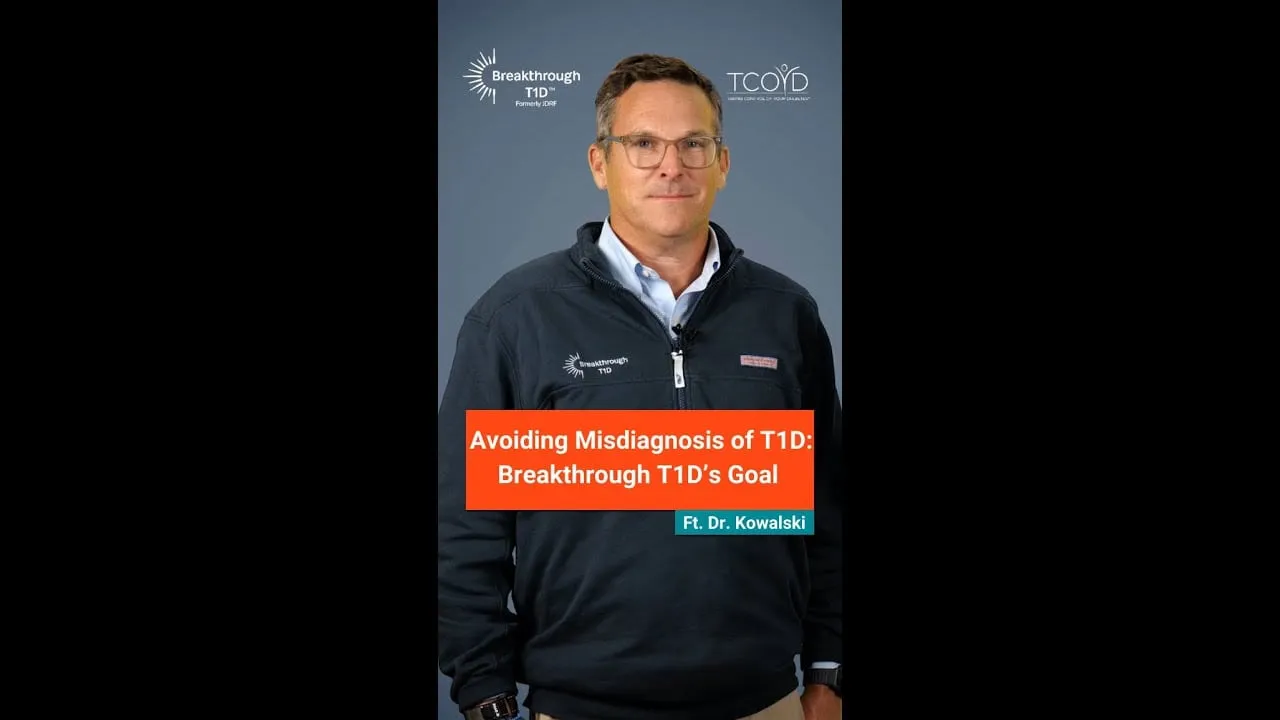
Getting the Right Diagnosis: Why Type 1 and Type 2 Classification Matters at Every Age
Researchers are working to understand how often people are misdiagnosed between Type 1 and Type 2 diabetes. Getting the correct diagnosis early—even if you're diagnosed later in life—can make a real difference in your treatment plan.
Evidence label explains the kind of source behind this article (for example peer-reviewed literature vs community video). It is not medical advice.
Key takeaways
- Misdiagnosis between Type 1 and Type 2 diabetes may be more common than we realize, and researchers are working to find out how often it happens
- Type 1 diabetes can be diagnosed at any age, including in your 50s or later, and getting the right diagnosis matters for treatment
- Breakthrough T1D is funding studies to better understand the scope of misdiagnosis across all age groups
- If you're diagnosed with diabetes later in life, it's worth confirming which type you have so you can get appropriate care quickly
A Common Problem We're Just Beginning to Measure
When someone is diagnosed with diabetes, it's not always clear whether they have Type 1 or Type 2. Both conditions affect blood sugar, but they work very differently in the body and require different treatment approaches. Yet people are sometimes given the wrong diagnosis—and may stay on the wrong treatment plan for months or years.
Right now, researchers don't have a clear picture of how often this happens. That's why organizations like Breakthrough T1D are funding studies that examine medical databases and registries to find real answers about how common misdiagnosis is.
Type 1 Diabetes Doesn't Have an Age Limit
Many people think Type 1 diabetes is only a childhood disease. In reality, people are diagnosed with Type 1 diabetes at all ages—including in their 50s, 60s, and beyond. When diagnosis happens later in life, it can be especially easy to miss, because doctors might assume an adult with diabetes has Type 2.
That assumption can lead to the wrong treatment. If someone with Type 1 diabetes is treated as if they have Type 2, they may not get the insulin they need, which can harm their health.
Why Getting It Right Matters
The goal of research into misdiagnosis is straightforward: make sure that everyone—no matter their age when diagnosed—gets the correct diagnosis and starts the right treatment as quickly as possible. This is especially important for people diagnosed later in life, who may have already spent time on an inappropriate treatment plan.
Breakthrough T1D is working to raise awareness about this issue and partner with researchers and clinicians to help people get answers faster.
Evidence label
Source: YouTube community video. Evidence type: Community video — lay discussion, not peer-reviewed research. Type1Cure is an information and intelligence hub, not a medical advice service. This article summarizes published research and does not provide diagnosis, treatment, or personal medical guidance. Always talk to your own care team before changing anything about your Type 1 diabetes management.
Type1Cure is an information and intelligence hub, not a medical advice service. This article summarizes published research and does not provide diagnosis, treatment, or personal medical guidance. Always talk to your own care team before changing anything about your Type 1 diabetes management.
Related reading
More evidence-labeled coverage across the Type1Cure library.
- DiagnosisWhy Type 1 Diabetes Is Often Missed in AdultsVideo report, corroborated with 5 indexed studies
- DiagnosisWhy Type 1 Diabetes Is Often Misdiagnosed—and Why Early Recognition MattersCommunity video — lay discussion, not peer-reviewed research
- DiagnosisNew Genetic Test May Help Identify Babies at Risk for Type 1 DiabetesCommunity video — lay discussion, not peer-reviewed research
- DiagnosisRecognizing the Signs: What Type 2 Diabetes Symptoms Felt Like for One PersonCommunity video — lay discussion, not peer-reviewed research
- DiagnosisWhen Type 2 Isn't Type 2: Why LADA Gets MissedCommunity video — lay discussion, not peer-reviewed research
- DiagnosisAdult Type 1 Diabetes: Why Misdiagnosis as Type 2 Is So CommonCommunity video — lay discussion, not peer-reviewed research