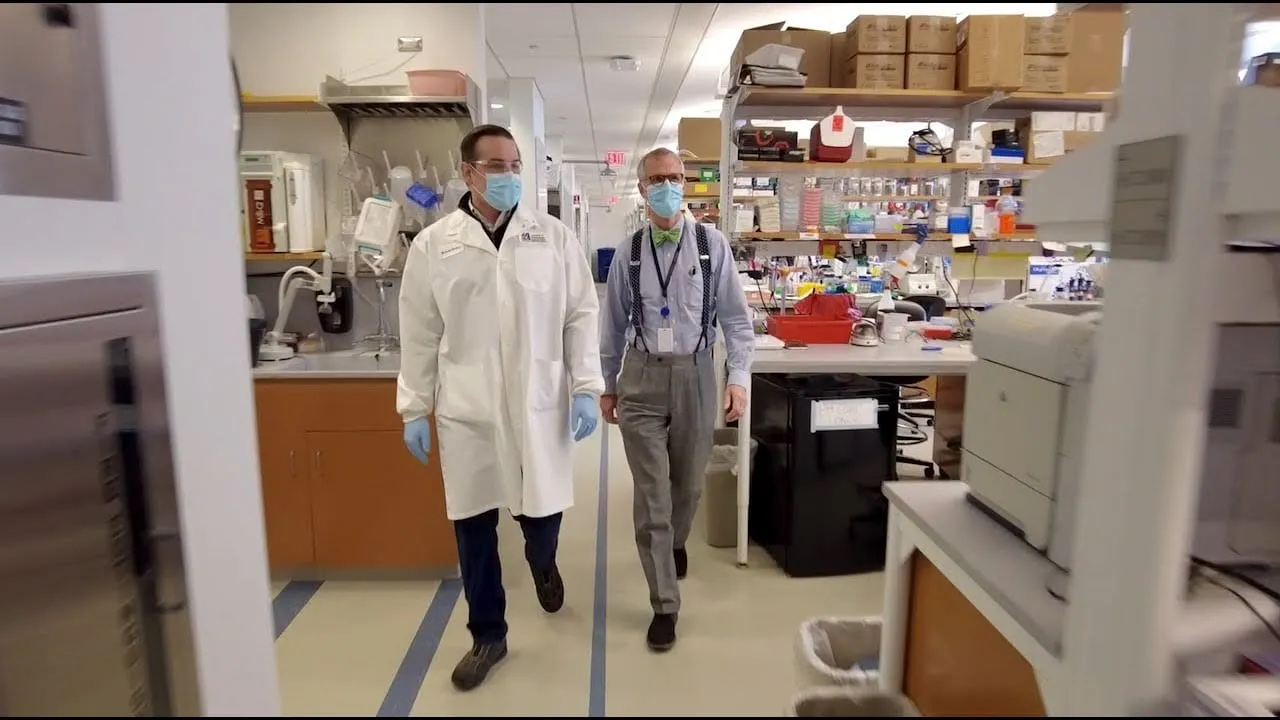
UMass Joins JDRF Center of Excellence to Pursue Type 1 Diabetes Cure Research
A new partnership brings together researchers at UMass, Harvard, and Jackson Laboratory to study how the immune system destroys insulin-producing cells—and how to replace them.
Evidence label explains the kind of source behind this article (for example peer-reviewed literature vs community video). It is not medical advice.
Key takeaways
- UMass has joined a JDRF Center of Excellence alongside Harvard and Jackson Laboratory to advance Type 1 diabetes research.
- The research focuses on understanding why the immune system attacks insulin-producing cells in Type 1 diabetes.
- Scientists are exploring whether insulin-producing cells can be camouflaged or engineered to avoid immune attack.
- The team is using stem cell technology and specialized mouse models to study diabetes pathogenesis.
- The goal is to develop a universal cell product that could replace damaged insulin cells in people with Type 1 diabetes.
A 35-Year Vision Takes Shape
For more than three decades, researchers have pursued a singular goal: understand Type 1 diabetes well enough to find a cure. That vision is now taking concrete form through a new partnership announced by the University of Massachusetts Medical School (UMass), which has joined a JDRF Center of Excellence alongside Harvard University and Jackson Laboratory.
The collaboration builds on earlier work by researchers including Dr. Doug Melton at Harvard and Drs. Dale Griner and Lenny Schultz at UMass, who developed a humanized mouse model to study diabetes. This tool has enabled scientists to better understand the disease mechanisms that underlie Type 1 diabetes.
The Core Challenge: Lost Insulin-Producing Cells
In Type 1 diabetes, the immune system mistakenly attacks and destroys beta cells—the insulin-producing cells found in the pancreas. Once these cells are gone, the body can no longer regulate blood sugar on its own.
Rather than trying to stop the immune attack alone, the new research direction focuses on a different approach: replacing those lost cells. Researchers are investigating whether insulin-producing cells can be engineered or camouflaged in ways that prevent the immune system from attacking them again.
Engineering a Universal Cell Treatment
The team is exploring the development of a universal cell product—stem cell-derived insulin-producing cells that could theoretically be given to many people with Type 1 diabetes. The strategy involves camouflaging these cells so they can function without triggering immune rejection.
This approach could offer a significant advantage over current treatments: rather than managing blood sugar levels with insulin therapy, a successfully engineered cell product could restore the body's natural ability to produce and regulate insulin.
A Long-Term Research Commitment
The JDRF Center of Excellence brings together expertise across stem cell biology, immunology, and diabetes research. By combining resources at UMass, Harvard, and Jackson Laboratory, the collaboration aims to accelerate progress on fundamental questions about diabetes pathogenesis and cell replacement strategies.
This work remains in the research phase. Significant challenges remain before any cell-based therapy could be tested in people, but the partnership represents a sustained commitment to pursuing biological solutions to Type 1 diabetes.
Evidence label
Source: YouTube community video. Evidence type: Community video — lay discussion, not peer-reviewed research. Type1Cure is an information and intelligence hub, not a medical advice service. This article summarizes published research and does not provide diagnosis, treatment, or personal medical guidance. Always talk to your own care team before changing anything about your Type 1 diabetes management.
Type1Cure is an information and intelligence hub, not a medical advice service. This article summarizes published research and does not provide diagnosis, treatment, or personal medical guidance. Always talk to your own care team before changing anything about your Type 1 diabetes management.
Related reading
More evidence-labeled coverage across the Type1Cure library.
- Cure ResearchStem Cell Research Offers New Hope—But Questions RemainCommunity video — lay discussion, not peer-reviewed research
- Cure ResearchWhat Science Now Knows About Beta Cell Regeneration in Type 1 DiabetesCommunity video — lay discussion, not peer-reviewed research
- Cure ResearchWhat We Know About Beta Cell Regeneration Research in DiabetesCommunity video — lay discussion, not peer-reviewed research
- Cure ResearchCan Beta Cells Recover? What Research Shows About Pancreatic Function and Type 2 DiabetesCommunity video — lay discussion, not peer-reviewed research
- Cure ResearchWhat Is the Islet Cell Act? A Guide to Proposed Changes in Transplant RegulationCommunity video — lay discussion, not peer-reviewed research
- Cure ResearchUnderstanding Beta Cell Function in Type 2 Diabetes: What Research ShowsCommunity video — lay discussion, not peer-reviewed research