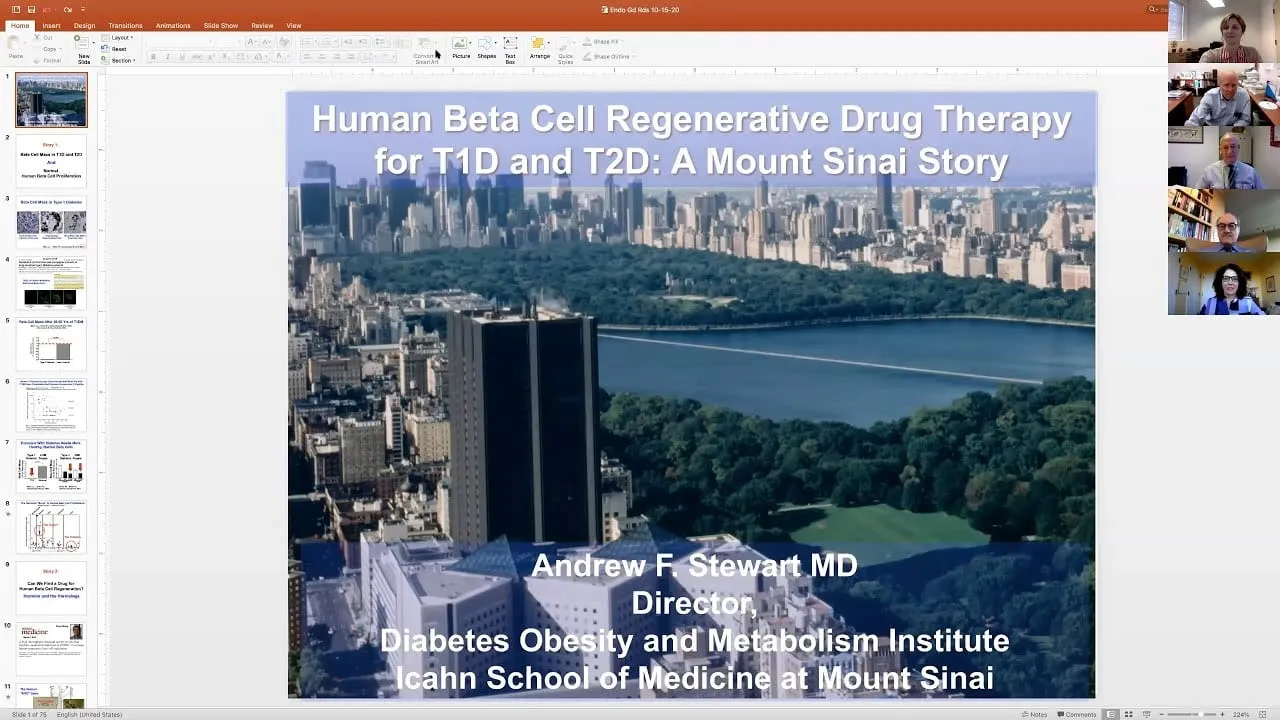
Mount Sinai's Focus on Beta Cell Regeneration Research
Mount Sinai's Obesity, Diabetes and Metabolism Institute is pursuing research into therapies that could help regenerate insulin-producing beta cells. Here's what the institute's leadership is working toward.
Evidence label explains the kind of source behind this article (for example peer-reviewed literature vs community video). It is not medical advice.
Key takeaways
- Mount Sinai has established a dedicated institute focused on translational diabetes research—work designed to move from lab discoveries toward human therapies
- The institute's director, Andy Stewart, shifted his research focus mid-career from bone metabolism to beta cell biology after discovering connections between the two fields
- Beta cell regeneration is an active area of investigation, though this video does not present completed clinical trial results or specific therapeutic outcomes
A New Hub for Diabetes Research
Mount Sinai has built the Obesity, Diabetes and Metabolism Institute into what leadership describes as a major force in diabetes research both within the institution and nationally. The institute emphasizes a translational approach—meaning research designed to move discoveries from the laboratory toward potential treatments for patients.
A Career Pivot to Beta Cells
Andy Stewart, the institute's founding director, earned his medical degree from Columbia University and completed his internal medicine residency at Roosevelt Hospital. He later moved to Yale, where he became a professor and leader in bone metabolism research, focusing on conditions like tumor-mediated hypercalcemia.
During his bone metabolism work, Stewart's group discovered a factor called PTHrP that turned out to play a role in beta cell biology—the cells that produce insulin. This unexpected connection sparked a mid-career shift: Stewart transitioned from bone research to become a beta cell scientist, eventually moving to the University of Pittsburgh where he served as chief of the division of endocrinology before joining Mount Sinai.
What This Means for Type 1 Diabetes
Beta cell regeneration research explores whether new insulin-producing cells could be grown or restored in people with Type 1 diabetes. The Mount Sinai institute's work in this area is ongoing, though this video does not present specific clinical trial data or treatment outcomes. The research represents one of several scientific approaches being pursued to address beta cell loss in diabetes.
Evidence label
Source: YouTube community video. Evidence type: Community video — lay discussion, not peer-reviewed research. Type1Cure is an information and intelligence hub, not a medical advice service. This article summarizes published research and does not provide diagnosis, treatment, or personal medical guidance. Always talk to your own care team before changing anything about your Type 1 diabetes management.
Type1Cure is an information and intelligence hub, not a medical advice service. This article summarizes published research and does not provide diagnosis, treatment, or personal medical guidance. Always talk to your own care team before changing anything about your Type 1 diabetes management.
Related reading
More evidence-labeled coverage across the Type1Cure library.
- Cure ResearchStem Cell Research Offers New Hope—But Questions RemainCommunity video — lay discussion, not peer-reviewed research
- Cure ResearchWhat Science Now Knows About Beta Cell Regeneration in Type 1 DiabetesCommunity video — lay discussion, not peer-reviewed research
- Cure ResearchWhat We Know About Beta Cell Regeneration Research in DiabetesCommunity video — lay discussion, not peer-reviewed research
- Cure ResearchCan Beta Cells Recover? What Research Shows About Pancreatic Function and Type 2 DiabetesCommunity video — lay discussion, not peer-reviewed research
- Cure ResearchWhat Is the Islet Cell Act? A Guide to Proposed Changes in Transplant RegulationCommunity video — lay discussion, not peer-reviewed research
- Cure ResearchUnderstanding Beta Cell Function in Type 2 Diabetes: What Research ShowsCommunity video — lay discussion, not peer-reviewed research