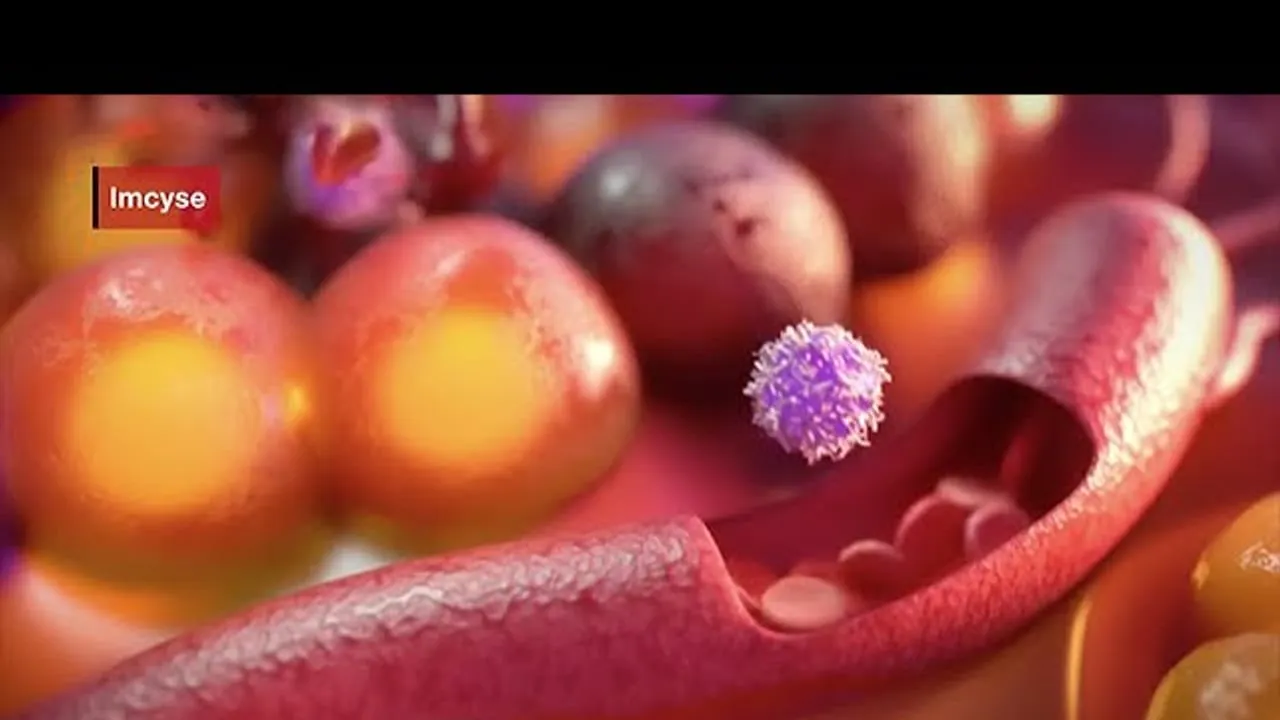
Imcyse's Approach to Retraining the Immune System in Type 1 Diabetes
Researchers are exploring a new class of molecules designed to retrain immune cells that attack beta cells. Here's what we know about this early-stage approach.
Evidence label explains the kind of source behind this article (for example peer-reviewed literature vs community video). It is not medical advice.
Key takeaways
- Type 1 diabetes occurs when the immune system mistakenly attacks insulin-producing beta cells; Imcyse is working to retrain, not suppress, this immune response
- The company is developing molecules called emo tops—modified versions of natural immune signals—to teach immune cells to stop attacking the pancreas
- Early animal research suggests this approach may be able to control the inflammatory processes involved in autoimmune attack
- Imcyse was founded as a spin-off from the University of Leuven in Belgium about 10 years ago and is now based in Belgium
The Problem: An Immune System Gone Wrong
Type 1 diabetes is fundamentally an autoimmune disease—the body's own immune system mistakenly identifies insulin-producing beta cells as a threat and attacks them. This immune misidentification is what leads to the loss of insulin production and the need for lifelong insulin therapy.
Rather than simply suppressing the immune system, researchers at Imcyse are exploring a different strategy: retraining immune cells to recognize beta cells as 'self' again and stop the attack.
A New Class of Molecules: Emo Tops
Imcyse is developing a class of molecules called emo tops. These are modified versions of naturally occurring immune signals (epitopes) that normally trigger autoimmune responses. By carefully modifying these natural signals, researchers aim to create a new type of immune cell—called cytolytic CD4 cells—that can redirect the immune system's behavior.
This approach emerged from unexpected findings in animal research. Scientists discovered something unusual in their experiments and pursued that discovery, leading to insights about how immune cell function could be modified in beneficial ways.
Early Research and Current Status
In animal studies, when researchers treated subjects with these modified immune sequences, they observed the ability to control inflammatory processes and reduce autoimmune attacks against organs. However, this research is still in early stages and has not yet advanced to human trials.
Imcyse, founded about 10 years ago as a spin-off from the University of Leuven in Belgium, continues to develop this approach as a potential treatment for autoimmune diseases including Type 1 diabetes.
What This Means
This work represents one avenue of research aimed at preserving or restoring beta cell function in Type 1 diabetes. While animal data are encouraging, it is important to note that many promising laboratory findings do not advance successfully to human use. Continued research and clinical trials will be needed to determine whether this approach can help people with Type 1 diabetes.
Evidence label
Origin: YouTube community video (Video report). Evidence: Video report, corroborated with 5 indexed studies. Type1Cure is an information and intelligence hub, not a medical advice service. This article summarizes published research and does not provide diagnosis, treatment, or personal medical guidance. Always talk to your own care team before changing anything about your Type 1 diabetes management.
Type1Cure is an information and intelligence hub, not a medical advice service. This article summarizes published research and does not provide diagnosis, treatment, or personal medical guidance. Always talk to your own care team before changing anything about your Type 1 diabetes management.
Related reading
More evidence-labeled coverage across the Type1Cure library.
- Cure ResearchWhat Are Disease-Modifying Therapies for Type 1 Diabetes?Video report, corroborated with 5 indexed studies
- Cure ResearchBeyond Insulin: Why Researchers Are Exploring New Approaches to Type 1 DiabetesVideo report, corroborated with 5 indexed studies
- Cure ResearchUnderstanding Disease-Modifying Therapies: What JDRF is Working TowardVideo report, corroborated with 5 indexed studies
- Cure ResearchStem Cell Research Offers New Hope—But Questions RemainCommunity video — lay discussion, not peer-reviewed research
- Cure ResearchWhat Science Now Knows About Beta Cell Regeneration in Type 1 DiabetesCommunity video — lay discussion, not peer-reviewed research
- Cure ResearchWhat We Know About Beta Cell Regeneration Research in DiabetesCommunity video — lay discussion, not peer-reviewed research