How Disease-Modifying Therapies Are Advancing Type 1 Diabetes Research
JDRF is strategically funding clinical trials and new research projects to develop therapies that can slow or prevent Type 1 diabetes. Here's how the research pipeline works to move the field forward.
Evidence label explains the kind of source behind this article (for example peer-reviewed literature vs community video). It is not medical advice.
Key takeaways
- Disease-modifying therapies aim to change the course of Type 1 diabetes by slowing its progression or preventing it from developing.
- JDRF funds research at multiple stages—from basic discovery through clinical trials—to build momentum in the field.
- Active clinical trials are testing new approaches while researchers work to improve how future trials are designed.
- Strategic funding is filling knowledge gaps to develop the next generation of therapies beyond current options.
Understanding the Research Pipeline
Developing new treatments for Type 1 diabetes requires a structured approach that begins with basic discovery research and moves through multiple stages before reaching patients. JDRF supports this entire pipeline—from early laboratory work to advanced clinical trials—while also advocating for government funding and partnering with for-profit organizations to accelerate progress.
Three Strategies Driving Progress Forward
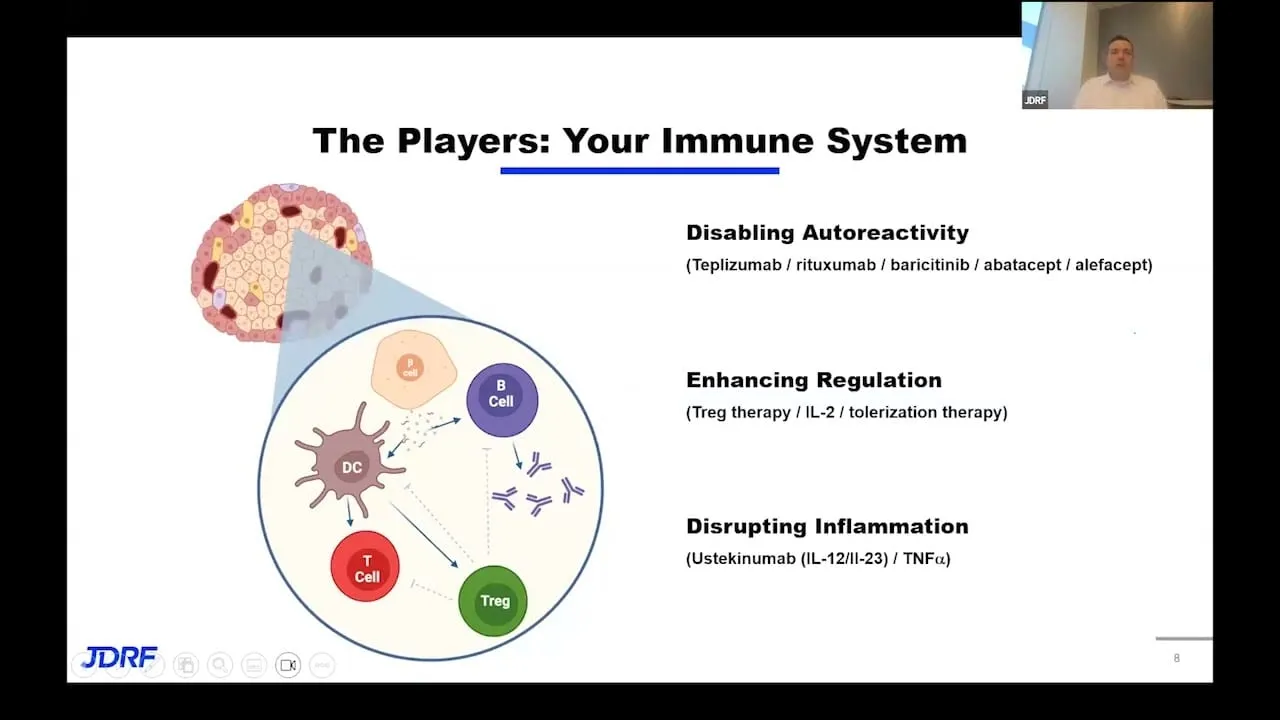
JDRF's disease-modifying therapy portfolio advances through three complementary approaches. First, active clinical trials funded by JDRF are testing new approaches in real patients and moving the broader field forward. Second, the organization is investing in ways to improve how future clinical trials are designed and conducted, building greater momentum for upcoming research. Third, JDRF is strategically funding new projects aimed at filling gaps in our current knowledge—work that will support the next generation of disease-modifying therapies.
What This Means for the Community
Disease-modifying therapies represent an important research direction because they aim to change the natural course of Type 1 diabetes, rather than simply managing blood sugar after diagnosis. By funding research across discovery, development, and clinical testing, JDRF is working to expand the options available to people living with or at risk for Type 1 diabetes. This multi-stage approach helps ensure that promising laboratory discoveries eventually reach patients who need them.
Evidence label
Origin: YouTube community video (Video report). Evidence: Video report, corroborated with 3 indexed studies. Type1Cure is an information and intelligence hub, not a medical advice service. This article summarizes published research and does not provide diagnosis, treatment, or personal medical guidance. Always talk to your own care team before changing anything about your Type 1 diabetes management.
Type1Cure is an information and intelligence hub, not a medical advice service. This article summarizes published research and does not provide diagnosis, treatment, or personal medical guidance. Always talk to your own care team before changing anything about your Type 1 diabetes management.
Related reading
More evidence-labeled coverage across the Type1Cure library.
- Cure ResearchWhat Are Disease-Modifying Therapies for Type 1 Diabetes?Video report, corroborated with 5 indexed studies
- Cure ResearchBeyond Insulin: Why Researchers Are Exploring New Approaches to Type 1 DiabetesVideo report, corroborated with 5 indexed studies
- Cure ResearchUnderstanding Disease-Modifying Therapies: What JDRF is Working TowardVideo report, corroborated with 5 indexed studies
- Cure ResearchStem Cell Research Offers New Hope—But Questions RemainCommunity video — lay discussion, not peer-reviewed research
- Cure ResearchWhat Science Now Knows About Beta Cell Regeneration in Type 1 DiabetesCommunity video — lay discussion, not peer-reviewed research
- Cure ResearchWhat We Know About Beta Cell Regeneration Research in DiabetesCommunity video — lay discussion, not peer-reviewed research