Experimental Cell Therapy Shows Early Promise Without Immunosuppression
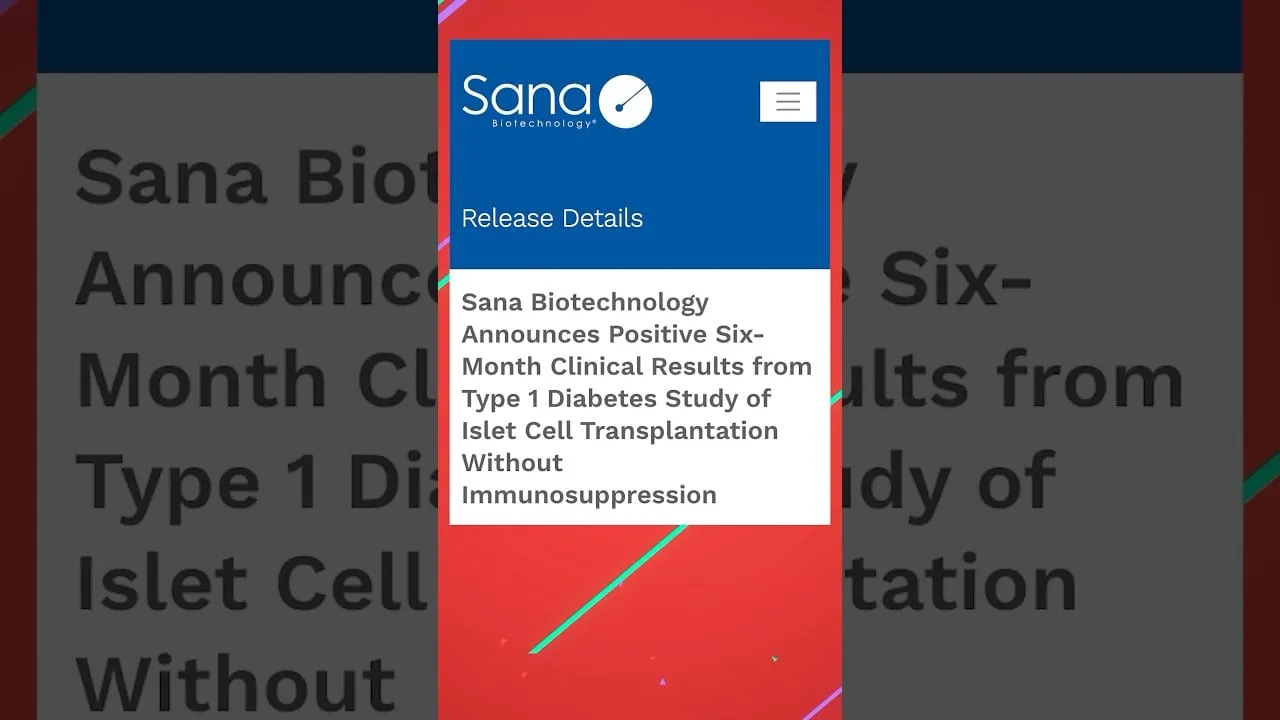
A company is testing genetically modified insulin-producing cells designed to evade the immune system, with early results showing one patient producing insulin without requiring immunosuppressive drugs.
Evidence label explains the kind of source behind this article (for example peer-reviewed literature vs community video). It is not medical advice.
Key takeaways
- Researchers are using genetically modified cells derived from germ cells that are engineered to produce insulin
- The cells are designed with genetic modifications intended to hide them from the Type 1 immune system
- Early results show one patient producing insulin without needing immunosuppressant medications
- The trial is currently recruiting patients who experience severe hypoglycemia unawareness (inability to feel low blood sugars)
- This approach is still in early stages and represents one case, not a proven treatment for everyone with Type 1
A New Approach to Cell Engineering
Researchers are exploring a novel strategy to help people with Type 1 diabetes: engineering cells that can produce insulin while avoiding attack from the immune system. Unlike previous approaches that rely on immunosuppressant medications to protect transplanted cells, this method uses genetic modifications to make the cells 'invisible' to the Type 1 immune response.
The therapy starts with germ cells—basic cells that can be developed into insulin-producing cells, or beta cells. Scientists then apply genetic modifications designed to camouflage these cells so the Type 1 immune system does not recognize them as beta cells. Because these cells can be manufactured in the laboratory, researchers can theoretically produce large quantities and adjust the genetic modifications as needed.
Early Results and Current Research
According to early reports, one patient in this research program has begun producing insulin again without requiring immunosuppressive medications. While this represents a promising initial result, it is important to note that this is one case in an early-stage trial, not yet evidence of a broadly effective treatment.
The company is actively recruiting patients for the trial, with a specific focus on people who experience autonomic hypoglycemia—a condition where the body cannot sense when blood sugar is dangerously low. These patients are at higher risk of severe low blood sugar episodes and may benefit most from a restored insulin supply.
What This Means and What Remains Unknown
If this approach continues to show promise, it could represent a significant shift in cell therapy for Type 1 diabetes. The potential to produce insulin-generating cells without long-term immunosuppression has been a major goal in diabetes research, since immunosuppressant medications carry their own risks and side effects.
However, much remains to be learned. One patient's early success does not establish that the therapy will work for others with Type 1 diabetes. More time and more participants are needed to understand safety, durability, and whether the cells continue to function and hide from the immune system over the long term. The research is ongoing, and anyone interested in participating should speak with their healthcare team about clinical trial opportunities.
Evidence label
Source: YouTube community video. Evidence type: Community video — lay discussion, not peer-reviewed research. Type1Cure is an information and intelligence hub, not a medical advice service. This article summarizes published research and does not provide diagnosis, treatment, or personal medical guidance. Always talk to your own care team before changing anything about your Type 1 diabetes management.
Type1Cure is an information and intelligence hub, not a medical advice service. This article summarizes published research and does not provide diagnosis, treatment, or personal medical guidance. Always talk to your own care team before changing anything about your Type 1 diabetes management.
Related reading
More evidence-labeled coverage across the Type1Cure library.
- Cure ResearchWhat Are Disease-Modifying Therapies for Type 1 Diabetes?Video report, corroborated with 5 indexed studies
- Cure ResearchBeyond Insulin: Why Researchers Are Exploring New Approaches to Type 1 DiabetesVideo report, corroborated with 5 indexed studies
- Cure ResearchUnderstanding Disease-Modifying Therapies: What JDRF is Working TowardVideo report, corroborated with 5 indexed studies
- Cure ResearchStem Cell Research Offers New Hope—But Questions RemainCommunity video — lay discussion, not peer-reviewed research
- Cure ResearchWhat Science Now Knows About Beta Cell Regeneration in Type 1 DiabetesCommunity video — lay discussion, not peer-reviewed research
- Cure ResearchWhat We Know About Beta Cell Regeneration Research in DiabetesCommunity video — lay discussion, not peer-reviewed research