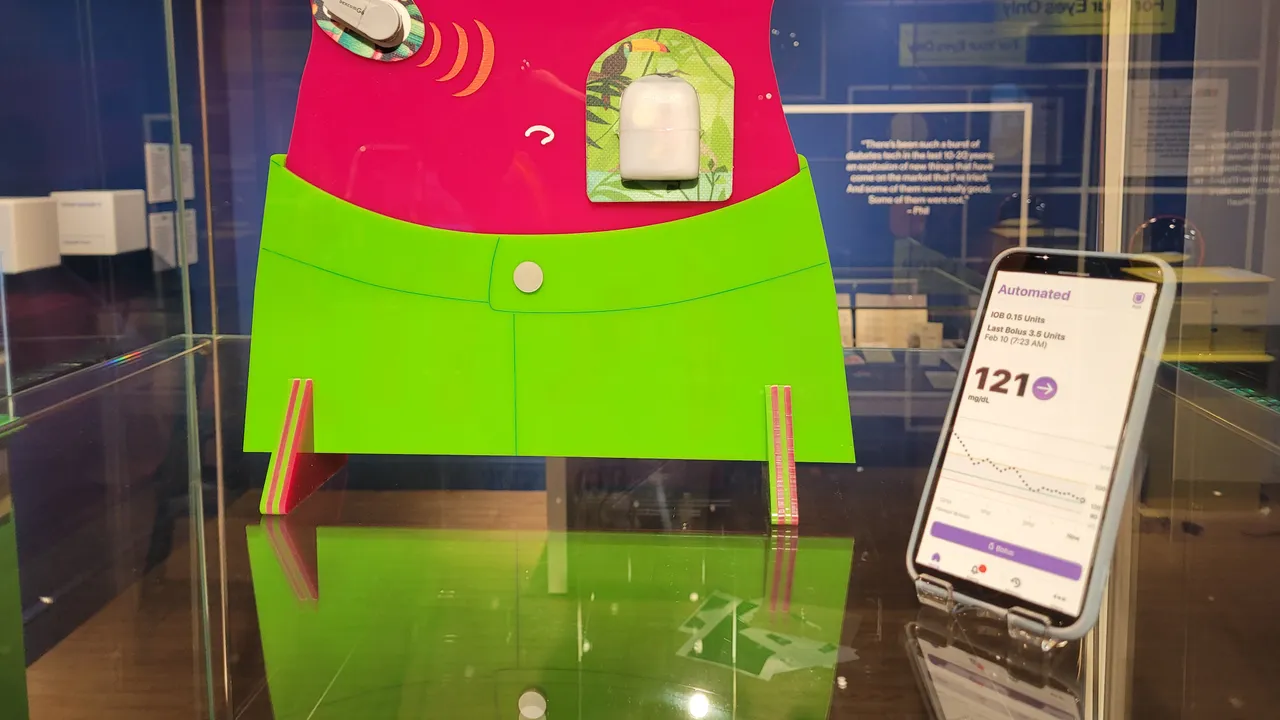
Artificial Pancreas Systems Show Strong Blood Sugar Control in Children and Teens
Real-world studies demonstrate that automated insulin delivery systems help young people with Type 1 diabetes spend more time in their target glucose range. Researchers are tracking how these devices perform outside clinical trials.
Evidence label explains the kind of source behind this article (for example peer-reviewed literature vs community video). It is not medical advice.
Key takeaways
- Artificial pancreas systems—both commercial and do-it-yourself versions—significantly improve time in range (the percentage of time blood sugar stays in target) for children and adolescents with Type 1 diabetes
- In real-world use, users of the Omnipod 5 system achieved a median time in range of 68.8%, with minimal time spent too low
- Studies from Denmark and China show that time in range increased by 7-8 percentage points after switching to automated insulin delivery, with HbA1c (average blood sugar over 3 months) also improving
- Younger children may benefit from using multiple glucose targets to balance control with safety
What Automated Insulin Delivery Systems Do
An artificial pancreas system automates the delivery of insulin based on continuous glucose monitoring data. Rather than relying on manual calculations and insulin injections, these systems use algorithms to adjust insulin dosing throughout the day and night, mimicking how a healthy pancreas would respond to changes in blood sugar.
There are two main types: commercial systems like Omnipod 5, which are FDA-approved and manufactured by companies, and do-it-yourself artificial pancreas (DIYAPS) systems, which are patient-built solutions that have gained popularity in recent years.
Real-World Results from Larger Studies
A large real-world analysis tracked 69,902 people using the Omnipod 5 system in the United States. The study, published in 2024, looked at actual usage data—not just controlled clinical trials. Researchers found that the median time in range (the percentage of time blood sugar stays between 70 and 180 mg/dL) was 68.8% for users targeting a glucose level of 110 mg/dL. Importantly, time spent below 70 mg/dL (too low) was minimal, with a median below 1.13%.
The results varied by age and glucose target. Children and adolescents (ages 2–17) targeting 110 mg/dL achieved a median time in range of 65.0%, while adults achieved 69.9%. Users with higher glucose targets (130–150 mg/dL) had lower time in range at 53.6%, which researchers say reflects more conservative settings often chosen for younger children.
Improvements Seen with Do-It-Yourself Systems
Studies from Denmark and China examined open-source and do-it-yourself artificial pancreas systems. In Denmark, 31 children and adolescents (median age 12) using these systems showed significant improvement: time in range increased from 62.29% to 70.12%, and HbA1c decreased from 6.7% to 6.3% after an average of 2.37 years of use.
In China, researchers studied 41 children (average age 9.4 years) using a DIYAPS. After switching to the automated system, time in range increased from 72.4% to 80.8%, and HbA1c dropped from 6.6% to 6.3%. Fasting blood glucose also improved significantly. Time spent in severe low blood sugar (below 54 mg/dL) decreased from 16.0% to 8.8%.
What These Findings Mean
These studies show that artificial pancreas systems—whether commercial or patient-built—can help children and teens achieve better blood sugar control in everyday life, not just in controlled research settings. Better time in range is associated with fewer long-term complications and can reduce the burden of managing Type 1 diabetes.
The data also suggest that these systems are effective across different age groups and settings, from large populations in the United States to smaller groups in Europe and Asia. Researchers continue to monitor how these technologies perform in real-world conditions to understand who benefits most and how to optimize their use.
Evidence label
Origin: National Institutes of Health (.gov) (News report). Evidence: News report, corroborated with 3 indexed studies. Type1Cure is an information and intelligence hub, not a medical advice service. This article summarizes published research and does not provide diagnosis, treatment, or personal medical guidance. Always talk to your own care team before changing anything about your Type 1 diabetes management.
Type1Cure is an information and intelligence hub, not a medical advice service. This article summarizes published research and does not provide diagnosis, treatment, or personal medical guidance. Always talk to your own care team before changing anything about your Type 1 diabetes management.
Related reading
More evidence-labeled coverage across the Type1Cure library.
- Living With T1DCorrection to "The Use of an Automated Insulin Delivery System Is Associated With a Reduction in Diabetes Distress and Improvement in Quality of Life in People With Type 1 Diabetes".PubMed indexed literature
- Living With T1DA New Class of Biologics Could Change How We Treat Type 1 DiabetesPubMed indexed literature
- Living With T1DHow Text Messages and Digital Tools Help Young Adults Manage Type 1 Diabetes During a Challenging Life TransitionNews report, corroborated with 1 indexed study
- Living With T1DThe Promise and Challenge of Oral Insulin: Where the Research StandsPubMed indexed literature
- Living With T1DYour Glucose Range May Not Be the Guideline Range—And That's Worth UnderstandingPubMed indexed literature
- Living With T1DTubeless Insulin Pumps Require Less Time to Start—Here's What That MeansNews report, corroborated with 1 indexed study