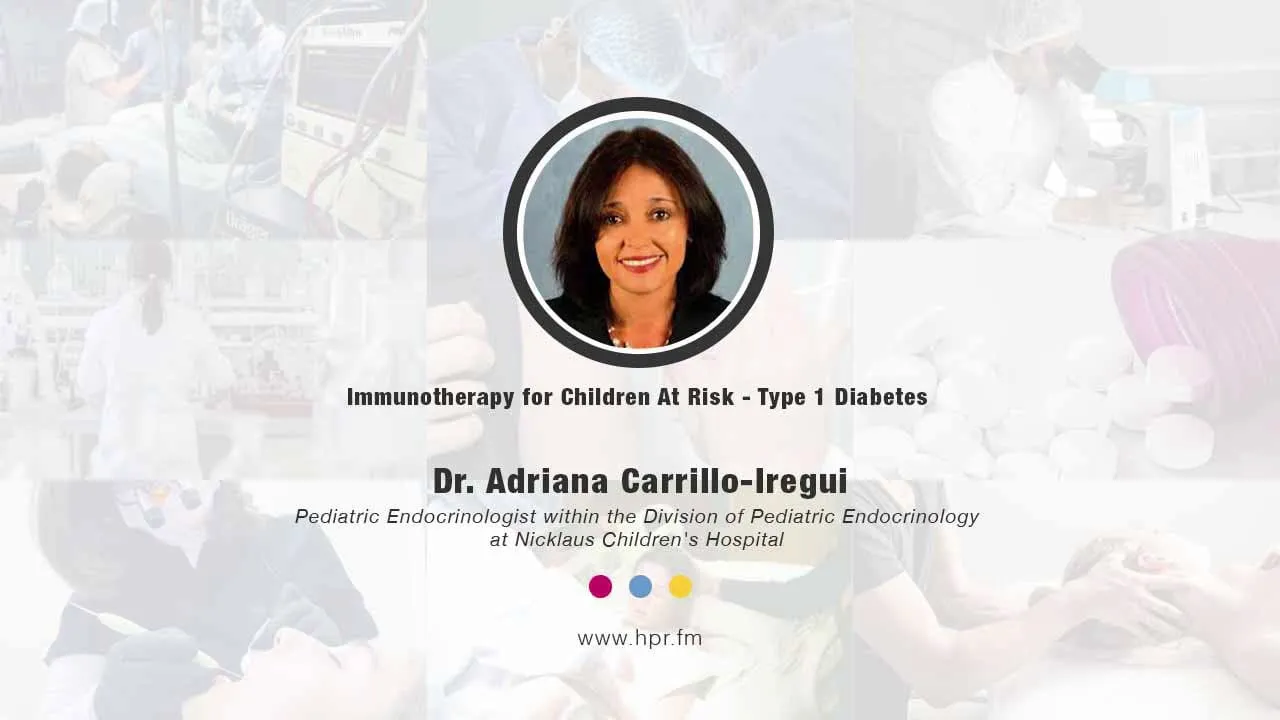
Understanding Immunotherapy as an Emerging Option for Children at Risk of Type 1 Diabetes
A pediatric endocrinologist discusses what we know about immunotherapy approaches for children who show early signs of developing Type 1 diabetes. Learn what the research landscape currently looks like and why early intervention matters.
Evidence label explains the kind of source behind this article (for example peer-reviewed literature vs community video). It is not medical advice.
Key takeaways
- Type 1 diabetes affects approximately 1 in 300 children and adolescents and is becoming more common
- Type 1 diabetes results from destruction of insulin-producing beta cells in the pancreas, which is different from Type 2 diabetes
- Immunotherapy represents an emerging treatment approach being studied for children at risk of developing Type 1 diabetes
- Pediatric endocrinologists are actively researching and developing new treatment strategies beyond traditional insulin management
What Is Type 1 Diabetes in Children?
Type 1 diabetes occurs when the body's immune system attacks and destroys the beta cells in the pancreas that produce insulin. This is fundamentally different from Type 2 diabetes, where the body initially struggles to use insulin effectively. In children and adolescents, Type 1 diabetes is becoming increasingly common, with current estimates suggesting roughly 1 in 300 children will develop the condition.
Current Management and the Search for New Approaches
Today, Type 1 diabetes in children is managed with insulin therapy. However, researchers and clinicians are exploring additional treatment strategies to prevent or delay the disease in children identified as being at high risk. These investigations represent an important area of active clinical research in pediatric endocrinology.
Immunotherapy: An Emerging Research Direction
Immunotherapy is among the emerging treatment approaches being studied for children at risk of Type 1 diabetes. While research in this area is ongoing, the goal is to develop new options that might help prevent or delay disease onset in vulnerable children. As with all emerging treatments, it is important to follow peer-reviewed research to understand what evidence supports these approaches.
Evidence label
Origin: YouTube community video (Video report). Evidence: Video report, corroborated with 5 indexed studies. Type1Cure is an information and intelligence hub, not a medical advice service. This article summarizes published research and does not provide diagnosis, treatment, or personal medical guidance. Always talk to your own care team before changing anything about your Type 1 diabetes management.
Type1Cure is an information and intelligence hub, not a medical advice service. This article summarizes published research and does not provide diagnosis, treatment, or personal medical guidance. Always talk to your own care team before changing anything about your Type 1 diabetes management.
Related reading
More evidence-labeled coverage across the Type1Cure library.
- Cure ResearchWhat Are Disease-Modifying Therapies for Type 1 Diabetes?Video report, corroborated with 5 indexed studies
- Cure ResearchBeyond Insulin: Why Researchers Are Exploring New Approaches to Type 1 DiabetesVideo report, corroborated with 5 indexed studies
- Cure ResearchUnderstanding Disease-Modifying Therapies: What JDRF is Working TowardVideo report, corroborated with 5 indexed studies
- Cure ResearchStem Cell Research Offers New Hope—But Questions RemainCommunity video — lay discussion, not peer-reviewed research
- Cure ResearchWhat Science Now Knows About Beta Cell Regeneration in Type 1 DiabetesCommunity video — lay discussion, not peer-reviewed research
- Cure ResearchWhat We Know About Beta Cell Regeneration Research in DiabetesCommunity video — lay discussion, not peer-reviewed research