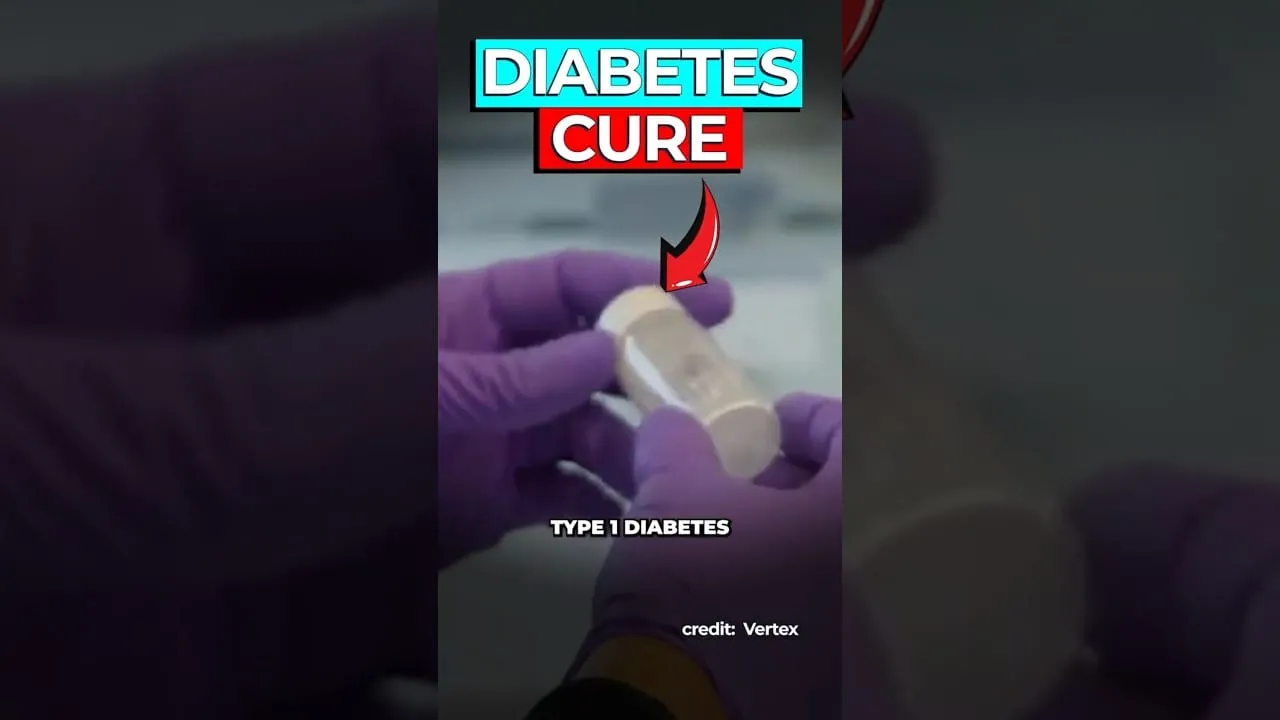
Lab-Grown Insulin-Producing Cells Show Promise in Early Clinical Trial
A clinical trial called Forward is testing whether stem cells engineered in the laboratory to produce insulin might reduce or eliminate the need for insulin injections in people with Type 1 diabetes. Early results suggest the approach warrants further study, though much research remains.
Evidence label explains the kind of source behind this article (for example peer-reviewed literature vs community video). It is not medical advice.
Key takeaways
- In the Forward trial, early reports indicate that some participants reduced their insulin needs after receiving engineered stem cells, though more data is needed to confirm these findings
- Scientists create insulin-producing beta cells (the cells damaged in Type 1 diabetes) from pluripotent stem cells and deliver them to the liver
- Participants currently require immunosuppressant medications to prevent the body from rejecting the transplanted cells
- This approach is still in clinical testing and is not yet available as a standard treatment
What the Forward Trial Is Testing
The Forward clinical trial is investigating whether transplanted, lab-grown cells can help the body produce more of its own insulin and manage blood sugar levels. Researchers start with pluripotent stem cells—cells that can develop into many different cell types—and carefully guide them to become beta cells, the insulin-producing cells that are damaged or destroyed in Type 1 diabetes.
Early Results
According to reports on the trial, some participants showed significant reductions in their insulin needs after receiving a single infusion of these engineered cells. The cells were placed in the liver, where they appear to have integrated with the body's tissues and contributed to glucose regulation. Further study with larger groups of participants will be important to confirm these early findings.
Current Limitations and Next Steps
Trial participants currently take immunosuppressant medications to prevent their immune system from rejecting the transplanted cells. This is an important consideration, as these medications come with their own effects. Researchers are exploring whether creating these cells from patients' own cells in the future might eventually reduce or eliminate the need for immunosuppression.
This approach is still in clinical testing and is not yet available as a standard treatment. More research is needed to understand its long-term safety and effectiveness, particularly across larger and more diverse patient populations. Anyone interested in clinical trials should discuss options with their healthcare team.
Evidence label
Source: YouTube community video. Evidence type: Community video — lay discussion, not peer-reviewed research. Type1Cure is an information and intelligence hub, not a medical advice service. This article summarizes published research and does not provide diagnosis, treatment, or personal medical guidance. Always talk to your own care team before changing anything about your Type 1 diabetes management.
Type1Cure is an information and intelligence hub, not a medical advice service. This article summarizes published research and does not provide diagnosis, treatment, or personal medical guidance. Always talk to your own care team before changing anything about your Type 1 diabetes management.
Related reading
More evidence-labeled coverage across the Type1Cure library.
- Cure ResearchWhat Are Disease-Modifying Therapies for Type 1 Diabetes?Video report, corroborated with 5 indexed studies
- Cure ResearchBeyond Insulin: Why Researchers Are Exploring New Approaches to Type 1 DiabetesVideo report, corroborated with 5 indexed studies
- Cure ResearchUnderstanding Disease-Modifying Therapies: What JDRF is Working TowardVideo report, corroborated with 5 indexed studies
- Cure ResearchStem Cell Research Offers New Hope—But Questions RemainCommunity video — lay discussion, not peer-reviewed research
- Cure ResearchWhat Science Now Knows About Beta Cell Regeneration in Type 1 DiabetesCommunity video — lay discussion, not peer-reviewed research
- Cure ResearchWhat We Know About Beta Cell Regeneration Research in DiabetesCommunity video — lay discussion, not peer-reviewed research