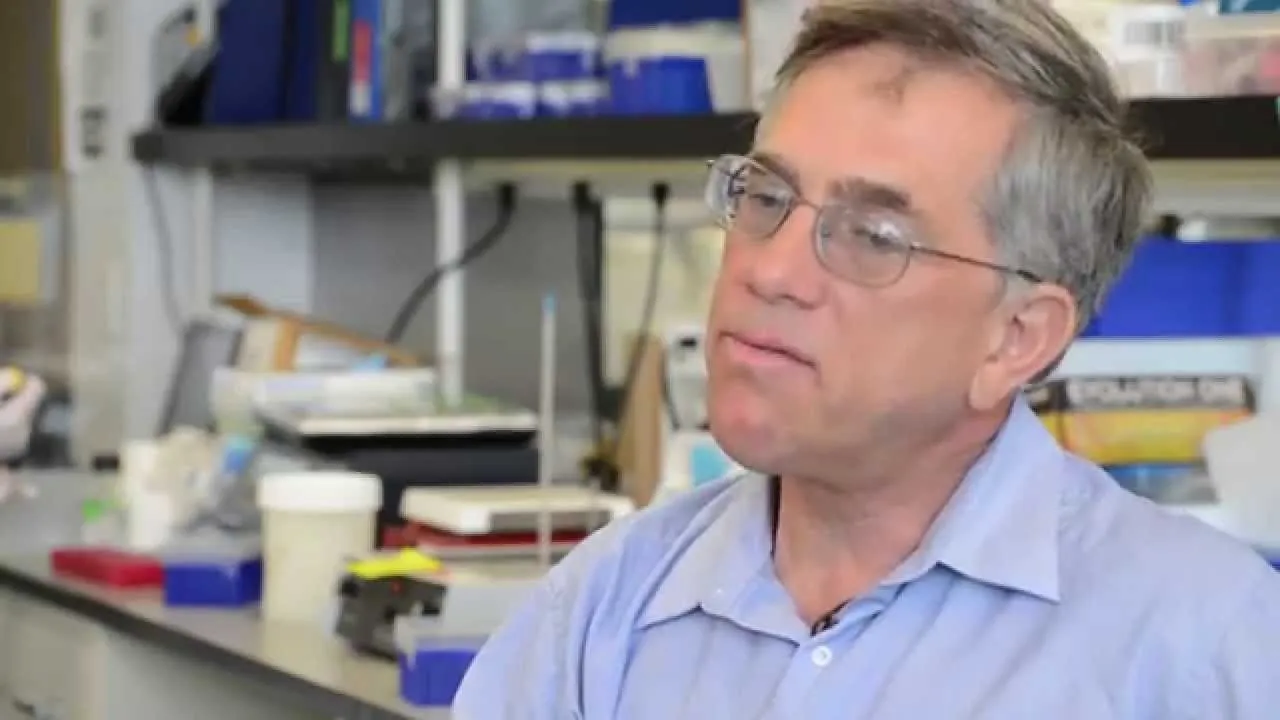
Scientists Explore New Approach to Regenerate Insulin-Producing Cells
Researchers are investigating whether neighboring pancreas cells can be converted into insulin-producing beta cells using a simple peptide injection—a potential path toward restoring natural insulin production in Type 1 diabetes.
Evidence label explains the kind of source behind this article (for example peer-reviewed literature vs community video). It is not medical advice.
Key takeaways
- In Type 1 diabetes, the immune system destroys beta cells that produce insulin, requiring insulin injections to control blood glucose
- Research suggests that alpha cells—neighbors to beta cells in the pancreas—can convert into beta cells under certain conditions
- Scientists are working to develop a simple peptide injection that could trigger this cell conversion, potentially replacing more complex surgical approaches
- This research is in early stages; it represents one investigational strategy among many being explored in Type 1 diabetes research
The Challenge of Type 1 Diabetes
Type 1 diabetes is an autoimmune disease in which the body's immune system attacks and destroys beta cells in the pancreas—the cells responsible for making insulin. Insulin is a hormone that regulates blood glucose levels. Without it, glucose accumulates in the bloodstream, causing damage throughout the body.
Currently, people with Type 1 diabetes manage the condition through insulin injections or pump therapy. Researchers continue to explore ways to restore the body's natural ability to produce insulin.
A Surprising Source of New Beta Cells
For years, scientists believed that beta cells regenerated from pancreas ducts—tube-like structures that carry digestive enzymes. However, research published in 2010 revealed something unexpected: alpha cells—the neighboring cells that produce glucagon, a hormone that works alongside insulin to regulate blood glucose—can convert into beta cells.
This conversion process, called transdifferentiation, means one cell type transforms into another. This discovery opened a new avenue for research into restoring insulin production.
Toward a Simpler Treatment Approach
Since the 2010 discovery, researchers have been working to translate this knowledge into a practical treatment. Their goal is to develop drugs that can reliably trigger alpha cells to convert into beta cells.
In recent work, scientists have made progress in simplifying the approach. Instead of relying on complex surgical procedures used in early studies, they are developing a peptide—a short chain of amino acids—that could be injected to induce the conversion process. This would make the approach more practical for potential therapeutic use.
What This Means for Type 1 Diabetes Research
This research represents one of many investigational approaches being pursued to help people with Type 1 diabetes. While the findings are promising, this work is still in early stages and much more research is needed to determine whether it could lead to a viable treatment.
The strategy of harnessing the pancreas's own cells to regenerate insulin production differs from other approaches being studied, such as immunotherapy or cell transplantation. As research continues, multiple pathways may eventually contribute to new options for managing or treating Type 1 diabetes.
Evidence label
Source: YouTube community video. Evidence type: Community video — lay discussion, not peer-reviewed research. Type1Cure is an information and intelligence hub, not a medical advice service. This article summarizes published research and does not provide diagnosis, treatment, or personal medical guidance. Always talk to your own care team before changing anything about your Type 1 diabetes management.
Type1Cure is an information and intelligence hub, not a medical advice service. This article summarizes published research and does not provide diagnosis, treatment, or personal medical guidance. Always talk to your own care team before changing anything about your Type 1 diabetes management.
Related reading
More evidence-labeled coverage across the Type1Cure library.
- Cure ResearchWhat Are Disease-Modifying Therapies for Type 1 Diabetes?Video report, corroborated with 5 indexed studies
- Cure ResearchBeyond Insulin: Why Researchers Are Exploring New Approaches to Type 1 DiabetesVideo report, corroborated with 5 indexed studies
- Cure ResearchUnderstanding Disease-Modifying Therapies: What JDRF is Working TowardVideo report, corroborated with 5 indexed studies
- Cure ResearchStem Cell Research Offers New Hope—But Questions RemainCommunity video — lay discussion, not peer-reviewed research
- Cure ResearchWhat Science Now Knows About Beta Cell Regeneration in Type 1 DiabetesCommunity video — lay discussion, not peer-reviewed research
- Cure ResearchWhat We Know About Beta Cell Regeneration Research in DiabetesCommunity video — lay discussion, not peer-reviewed research