Researchers Report Discovery of Small Molecules That Trigger Beta Cell Regeneration
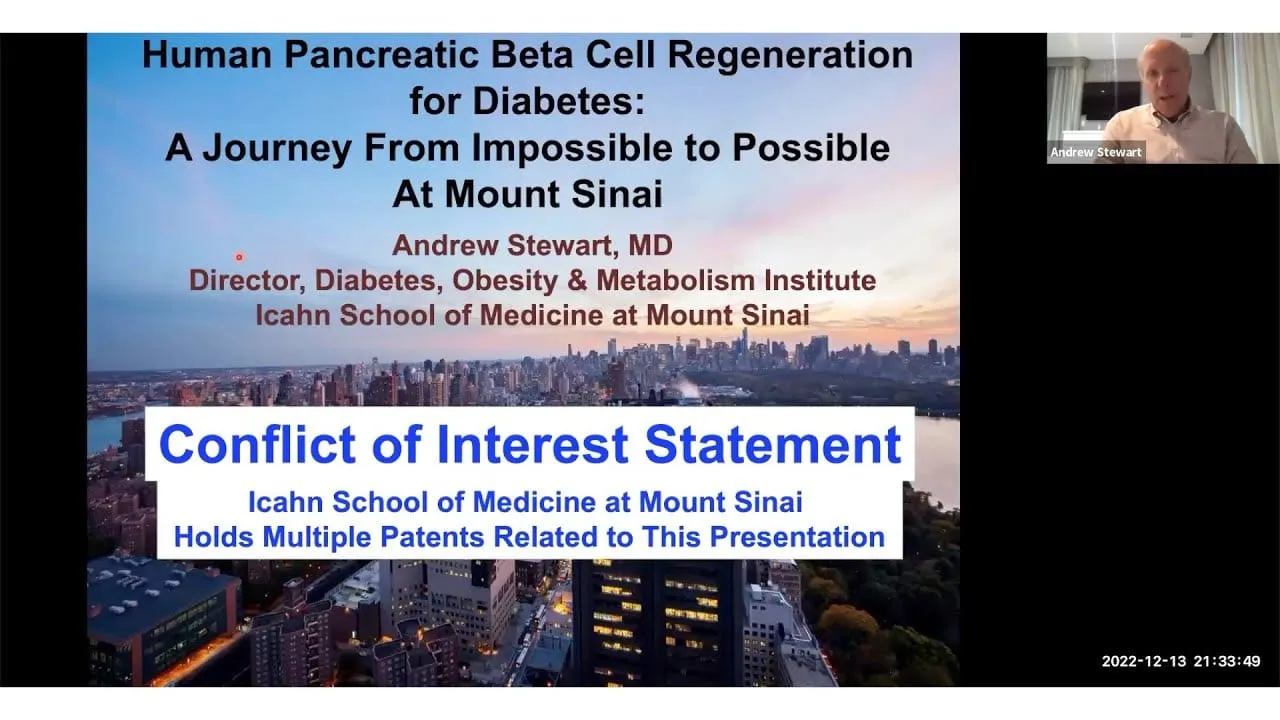
Scientists at Mount Sinai have identified a new class of drugs that appear capable of prompting human pancreatic beta cells to regenerate. The work represents a shift in thinking about whether beta cell renewal is possible in diabetes.
Evidence label explains the kind of source behind this article (for example peer-reviewed literature vs community video). It is not medical advice.
Key takeaways
- Researchers at Mount Sinai's Diabetes, Obesity, Metabolism Institute have identified small molecule drugs that induce human beta cell regeneration in laboratory settings.
- This work is in early stages and has not yet been tested in patients with Type 1 or Type 2 diabetes.
- The discovery challenges the long-held assumption that human beta cell regeneration was impossible.
- Further research is needed to understand safety, effectiveness, and whether these findings will translate to clinical benefit.
A Shift in Diabetes Research
For decades, a fundamental assumption shaped diabetes research: adult human pancreatic beta cells—the insulin-producing cells lost in Type 1 diabetes—could not regenerate. This belief limited the scope of therapeutic approaches.
Scientists at Mount Sinai's Diabetes, Obesity, Metabolism Institute, led by Dr. Andrew Stewart, are challenging that assumption. Their team has identified the first small molecule class of drugs capable of inducing human beta cells to regenerate, according to a presentation of their work.
What This Research Addresses
The discovery has potential implications for both Type 1 and Type 2 diabetes. In Type 1 diabetes, the immune system attacks and destroys beta cells, leading to insulin deficiency. In Type 2 diabetes, beta cells gradually lose function. A treatment that could trigger beta cell regeneration could theoretically help restore insulin production in either condition.
The work represents a departure from decades of thinking about what is biologically possible in adult human pancreatic tissue.
Where This Research Stands
This work has been conducted in laboratory settings and has not yet been tested in patients. Many discoveries that show promise in cells or animal models do not translate successfully to human clinical benefit.
The identification of these small molecules is an early-stage finding. Significant additional research will be needed to understand whether these drugs are safe and effective in people with diabetes, and to determine what dosing, timing, and other factors might optimize their use.
Why This Matters
For the diabetes community, this research offers a new direction for investigation. Rather than viewing beta cell loss as irreversible, scientists are now exploring whether regeneration is chemically inducible.
Patients and families should remain hopeful about long-term research progress while maintaining realistic expectations about timelines. Early discoveries often require 10 or more years of additional research before reaching clinical use.
Evidence label
Source: YouTube community video. Evidence type: Community video — lay discussion, not peer-reviewed research. Type1Cure is an information and intelligence hub, not a medical advice service. This article summarizes published research and does not provide diagnosis, treatment, or personal medical guidance. Always talk to your own care team before changing anything about your Type 1 diabetes management.
Type1Cure is an information and intelligence hub, not a medical advice service. This article summarizes published research and does not provide diagnosis, treatment, or personal medical guidance. Always talk to your own care team before changing anything about your Type 1 diabetes management.
Related reading
More evidence-labeled coverage across the Type1Cure library.
- Cure ResearchWhat Are Disease-Modifying Therapies for Type 1 Diabetes?Video report, corroborated with 5 indexed studies
- Cure ResearchBeyond Insulin: Why Researchers Are Exploring New Approaches to Type 1 DiabetesVideo report, corroborated with 5 indexed studies
- Cure ResearchUnderstanding Disease-Modifying Therapies: What JDRF is Working TowardVideo report, corroborated with 5 indexed studies
- Cure ResearchStem Cell Research Offers New Hope—But Questions RemainCommunity video — lay discussion, not peer-reviewed research
- Cure ResearchWhat Science Now Knows About Beta Cell Regeneration in Type 1 DiabetesCommunity video — lay discussion, not peer-reviewed research
- Cure ResearchWhat We Know About Beta Cell Regeneration Research in DiabetesCommunity video — lay discussion, not peer-reviewed research