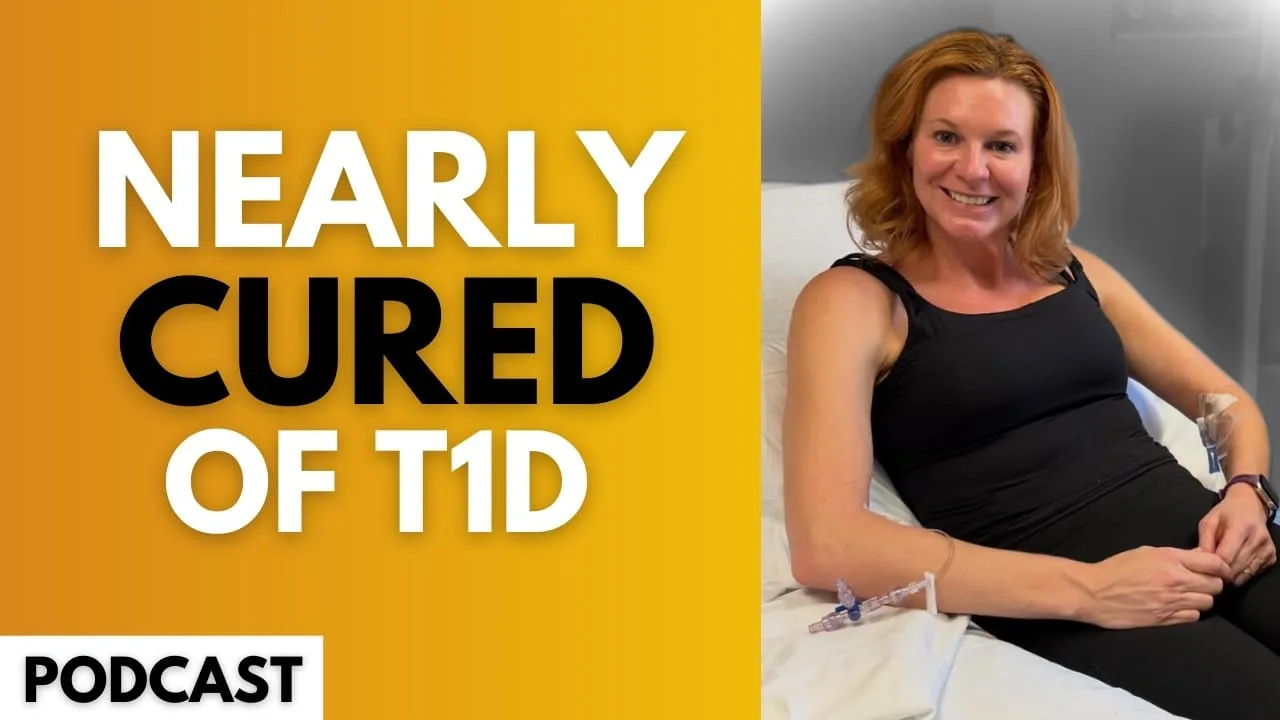
One Woman's Dramatic Reduction in Daily Insulin: What We Know About Her Experience
A podcast discussion features a woman with Type 1 diabetes who has reduced her daily insulin to just a few units after 13 years of dependence. We explore what her story tells us and what questions remain.
Evidence label explains the kind of source behind this article (for example peer-reviewed literature vs community video). It is not medical advice.
Key takeaways
- One individual reported reducing insulin to just a few units per day after living with Type 1 diabetes for 13 years, but this account comes from a podcast discussion, not peer-reviewed research.
- The term 'functional cure' was used in the podcast, but this is not a medical diagnosis or conclusion from a clinical trial—it's language used in community discussion.
- Without access to clinical trial data, peer-reviewed results, or detailed medical documentation, we cannot determine what caused this change or whether it represents a reproducible treatment outcome.
- Individual stories are valuable for raising awareness and hope, but they differ from scientific evidence that can be tested and verified across many patients.
Hearing One Woman's Story
On a recent Diabetes Nerd podcast episode, host Ginger Vieira spoke with Katie Bethand, who shared her experience living with Type 1 diabetes for the past 13 years. According to the conversation, Katie has reduced her daily insulin requirement to just a few units—a dramatic change from the insulin dependence she has managed for over a decade. She is located in Little Rock, Arkansas, and was diagnosed with Type 1 diabetes at age 26.
What the Source Material Does and Doesn't Tell Us
This account comes from a community podcast discussion, not from peer-reviewed clinical research or published trial data. Podcast conversations, while meaningful and engaging, are different from the rigorous testing and documentation that happens in scientific studies. Without access to Katie's complete medical records, laboratory results, or formal trial documentation, we cannot verify the details of her situation or understand what may have contributed to her insulin reduction.
The podcast used the phrase 'functional cure,' but this is language chosen during a conversation, not a clinical diagnosis or formal conclusion from a research team. It's important to distinguish between hopeful personal accounts and scientifically verified outcomes.
Why Individual Stories Matter—and Why They're Not Enough
Stories like Katie's play an important role in the Type 1 diabetes community. They can inspire hope, spark conversations, and draw attention to new approaches. However, a single person's experience—no matter how positive—cannot tell us whether a treatment works for most people, whether it works for some, or what factors made the difference in one person's case.
To understand whether a new approach truly works, scientists need to conduct controlled trials with many participants, carefully measure outcomes, and publish their findings so other researchers can review and verify the results.
What We Need to Know Next
If Katie's experience is related to a clinical trial, the published results from that trial will provide the evidence we need. Peer-reviewed papers will detail how many participants were enrolled, what the treatment involved, how long people were followed, and what the measurable outcomes were. Until that information is publicly available, we can appreciate her personal journey while acknowledging that we cannot yet draw broader conclusions about its meaning for other people with Type 1 diabetes.
Evidence label
Source: YouTube community video. Evidence type: Community video — lay discussion, not peer-reviewed research. Type1Cure is an information and intelligence hub, not a medical advice service. This article summarizes published research and does not provide diagnosis, treatment, or personal medical guidance. Always talk to your own care team before changing anything about your Type 1 diabetes management.
Type1Cure is an information and intelligence hub, not a medical advice service. This article summarizes published research and does not provide diagnosis, treatment, or personal medical guidance. Always talk to your own care team before changing anything about your Type 1 diabetes management.
Related reading
More evidence-labeled coverage across the Type1Cure library.
- Cure ResearchWhat Are Disease-Modifying Therapies for Type 1 Diabetes?Video report, corroborated with 5 indexed studies
- Cure ResearchBeyond Insulin: Why Researchers Are Exploring New Approaches to Type 1 DiabetesVideo report, corroborated with 5 indexed studies
- Cure ResearchUnderstanding Disease-Modifying Therapies: What JDRF is Working TowardVideo report, corroborated with 5 indexed studies
- Cure ResearchStem Cell Research Offers New Hope—But Questions RemainCommunity video — lay discussion, not peer-reviewed research
- Cure ResearchWhat Science Now Knows About Beta Cell Regeneration in Type 1 DiabetesCommunity video — lay discussion, not peer-reviewed research
- Cure ResearchWhat We Know About Beta Cell Regeneration Research in DiabetesCommunity video — lay discussion, not peer-reviewed research