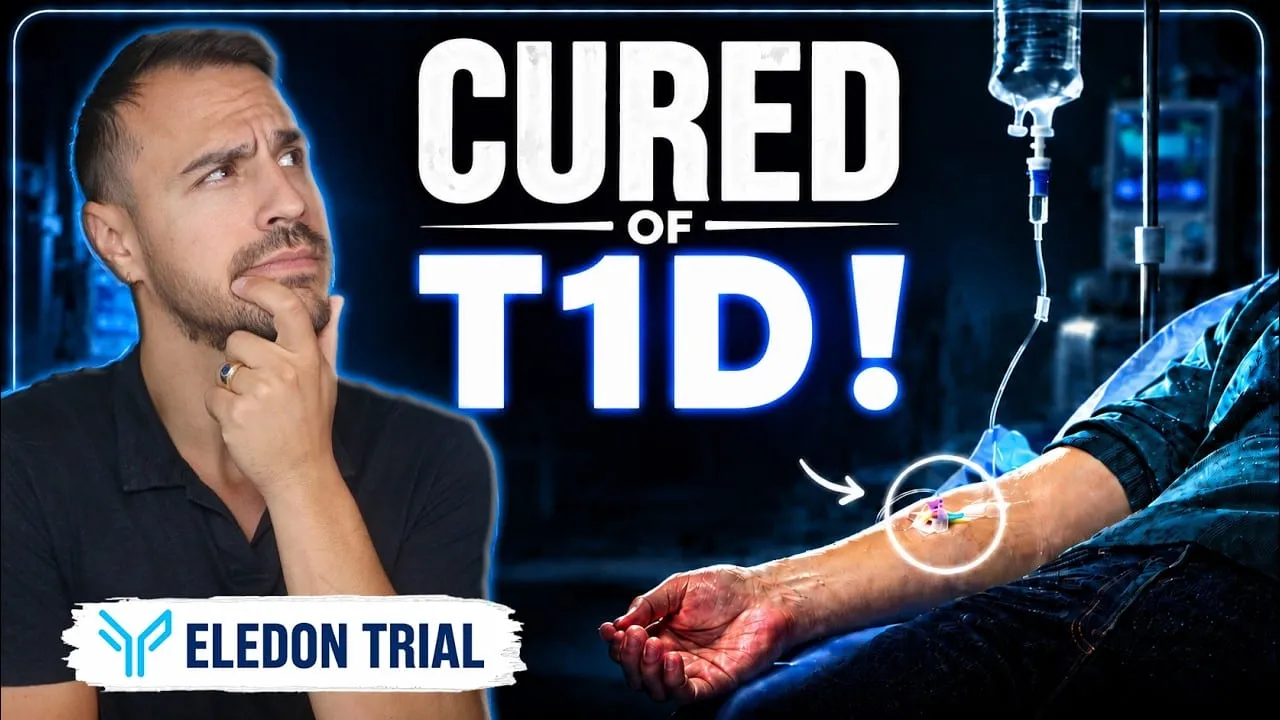
One Patient's Experience: Islet Transplant Combined With Teplizumab
A participant in the EladON trial shares her story of receiving an islet cell transplant alongside Teplizumab treatment. We look at what her experience reveals about this emerging approach.
Evidence label explains the kind of source behind this article (for example peer-reviewed literature vs community video). It is not medical advice.
Key takeaways
- Islet cell transplantation combined with Teplizumab is being studied as a potential way to restore insulin production in people with Type 1 diabetes
- One trial participant reported stopping insulin use several months after receiving both treatments
- Individual patient stories, while hopeful, are not the same as clinical evidence—peer-reviewed research data is needed to understand safety and effectiveness
- This approach involves both a surgical procedure and an immunological treatment, making it more complex than current standard diabetes management
A Patient's Journey in the EladON Trial
Katie Beth Hand, identified as Patient 9 in the EladON trial, has shared her experience receiving an islet cell transplant combined with Teplizumab treatment. According to her account, she stopped using insulin approximately three months after her transplant and has remained off insulin for the subsequent months. She removed her continuous glucose monitor and describes her current life as free from many of the daily management tasks Type 1 diabetes typically requires.
What Makes This Approach Different
This treatment combines two components: islet cell transplantation (a surgical procedure to restore insulin-producing cells) and Teplizumab (an immunological treatment). According to the patient's account, this approach differs from traditional immunosuppressants by being described as less invasive. Teplizumab works by modulating the immune system's attack on insulin-producing cells, while the transplanted islets aim to restore the body's ability to produce insulin naturally.
Understanding Patient Stories vs. Clinical Evidence
Individual patient experiences, while compelling and valuable for understanding lived experience, are anecdotal accounts rather than clinical evidence. A single patient's positive outcome—shared through social media or video interviews—does not establish whether a treatment works safely and effectively across larger populations. The EladON trial is ongoing research designed to gather that broader evidence through structured study protocols and peer-reviewed analysis.
Patient stories can raise awareness and hope within the Type 1 diabetes community. However, results in one person do not predict results in others, and long-term safety data requires time and rigorous monitoring to understand.
What Comes Next
As the EladON trial continues to enroll and follow participants, researchers will collect data on how many patients achieve similar outcomes, how long those outcomes last, and what side effects or complications may emerge over time. That peer-reviewed research will provide the foundation for understanding whether this combination approach represents a meaningful advance in Type 1 diabetes treatment. Until then, patient testimonies remain important human stories—but not clinical proof.
Evidence label
Source: YouTube community video. Evidence type: Community video — lay discussion, not peer-reviewed research. Type1Cure is an information and intelligence hub, not a medical advice service. This article summarizes published research and does not provide diagnosis, treatment, or personal medical guidance. Always talk to your own care team before changing anything about your Type 1 diabetes management.
Type1Cure is an information and intelligence hub, not a medical advice service. This article summarizes published research and does not provide diagnosis, treatment, or personal medical guidance. Always talk to your own care team before changing anything about your Type 1 diabetes management.
Related reading
More evidence-labeled coverage across the Type1Cure library.
- Cure ResearchWhat Are Disease-Modifying Therapies for Type 1 Diabetes?Video report, corroborated with 5 indexed studies
- Cure ResearchBeyond Insulin: Why Researchers Are Exploring New Approaches to Type 1 DiabetesVideo report, corroborated with 5 indexed studies
- Cure ResearchUnderstanding Disease-Modifying Therapies: What JDRF is Working TowardVideo report, corroborated with 5 indexed studies
- Cure ResearchStem Cell Research Offers New Hope—But Questions RemainCommunity video — lay discussion, not peer-reviewed research
- Cure ResearchWhat Science Now Knows About Beta Cell Regeneration in Type 1 DiabetesCommunity video — lay discussion, not peer-reviewed research
- Cure ResearchWhat We Know About Beta Cell Regeneration Research in DiabetesCommunity video — lay discussion, not peer-reviewed research