New Global Screening Guidelines: Testing Children for Type 1 Diabetes Starting at Age 2
International experts have released the first coordinated guidance on when and how to screen young children for type 1 diabetes. Early detection is linked to better outcomes at diagnosis.
Evidence label explains the kind of source behind this article (for example peer-reviewed literature vs community video). It is not medical advice.
Key takeaways
- Nearly 30 international experts and 20 diabetes societies have published new screening guidance in Diabetologia
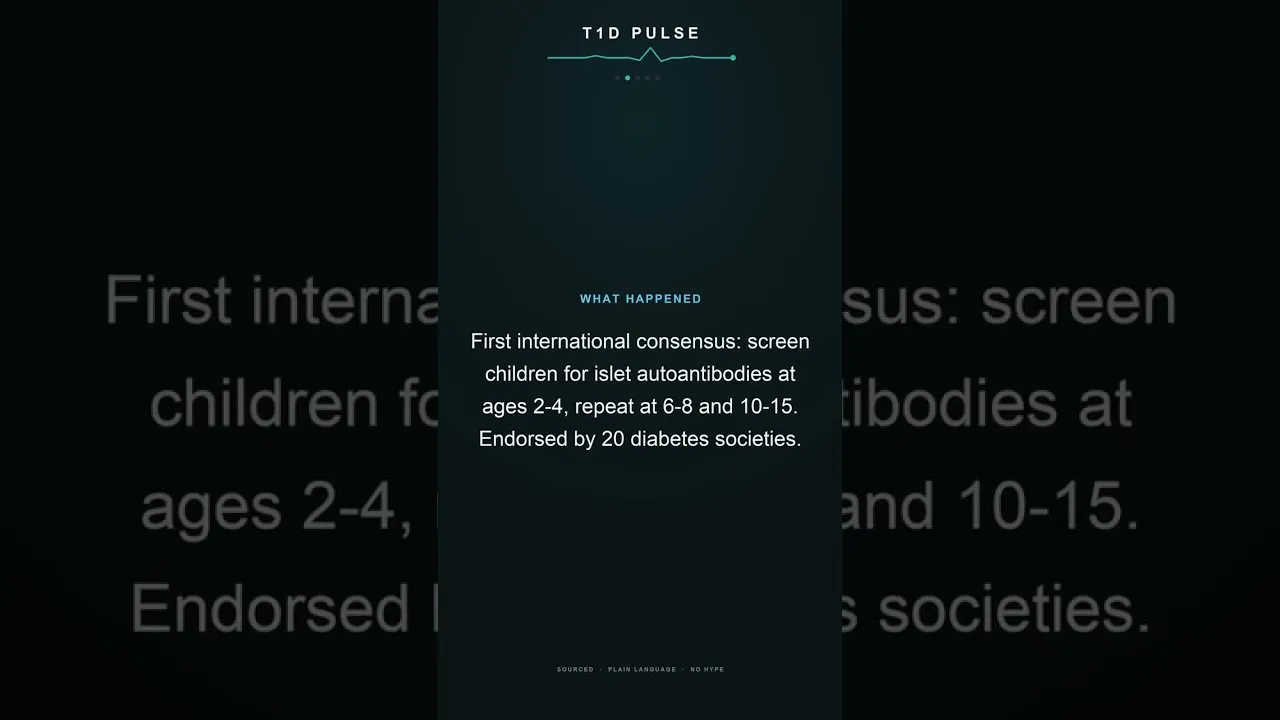
- Screening for islet autoantibodies should begin between ages 2 and 4, with follow-up testing at ages 6–8 and 10–15
- Early detection is associated with lower risk of diabetic ketoacidosis (DKA) at the time of diagnosis
- These are recommendations for health systems; individual screening programs are not yet widely available
- Positive results require confirmation with a second test before any further action
A First International Playbook for Early Detection
For the first time, the global diabetes community has a coordinated approach to screening young children for type 1 diabetes. Published in September 2026 in the journal Diabetologia, the guidance represents input from nearly 30 experts and has been endorsed by 20 diabetes societies worldwide.
The new recommendations establish a clear timeline for testing: screening should begin between ages 2 and 4, with repeat testing scheduled around ages 6–8 and again between ages 10–15. These testing windows align with routine childhood checkups, making screening practical to implement within existing healthcare systems.
What the Screening Looks For
The screening targets islet autoantibodies—markers that indicate the immune system is attacking the insulin-producing cells in the pancreas. Finding these antibodies before symptoms appear allows doctors to identify children at risk for type 1 diabetes before diagnosis.
When a screening test is positive, a second confirmatory test is required before any conclusions are drawn. This two-step process helps avoid false alarms and ensures accuracy.
Why Early Detection Matters
Research shows that identifying type 1 diabetes early is linked to a lower risk of diabetic ketoacidosis (DKA) at the time of diagnosis. DKA is a serious complication that can develop when blood sugar becomes very high and the body cannot produce enough insulin. Detecting the disease sooner gives families and healthcare providers time to prepare and intervene, potentially preventing or reducing the severity of this dangerous condition.
What This Means for Families Right Now
These guidelines represent recommendations for health systems and policymakers, not a screening program you can book tomorrow. Implementation will vary by country and region as healthcare systems decide how to adopt the guidance.
If you have questions about whether screening is available in your area or appropriate for your family, speak with your child's healthcare provider. They can discuss your individual situation and what options may be available to you.
Evidence label
Origin: YouTube / T1D Pulse (Video report). Evidence: Video report — unverified, pending corroboration. Type1Cure is an information and intelligence hub, not a medical advice service. This article summarizes published research and does not provide diagnosis, treatment, or personal medical guidance. Always talk to your own care team before changing anything about your Type 1 diabetes management.
Type1Cure is an information and intelligence hub, not a medical advice service. This article summarizes published research and does not provide diagnosis, treatment, or personal medical guidance. Always talk to your own care team before changing anything about your Type 1 diabetes management.
Related reading
More evidence-labeled coverage across the Type1Cure library.
- Cure & AdvancementsCell Replacement Therapy: A New Frontier in Type 1 Diabetes ResearchVideo report, corroborated with 5 indexed studies
- Cure & AdvancementsWhy Beta Cells Die in Type 1 Diabetes While Alpha Cells SurviveNews report, corroborated with 2 indexed studies
- Cure & AdvancementsEarly Trial Shows Some People with Type 1 Diabetes Can Reduce or Stop Insulin—Here's What We KnowNews report, corroborated with 3 indexed studies
- Cure & AdvancementsBeta Cell Therapy: Moving From Lab Promise to Real-World TreatmentVideo report, corroborated with 2 indexed studies
- Cure & AdvancementsUnderstanding the Eleodon Trial: What Early Results ShowVideo report — unverified, pending corroboration
- Cure & AdvancementsIslet Cell Therapies Advance: What You Need to KnowNews report, corroborated with 3 indexed studies