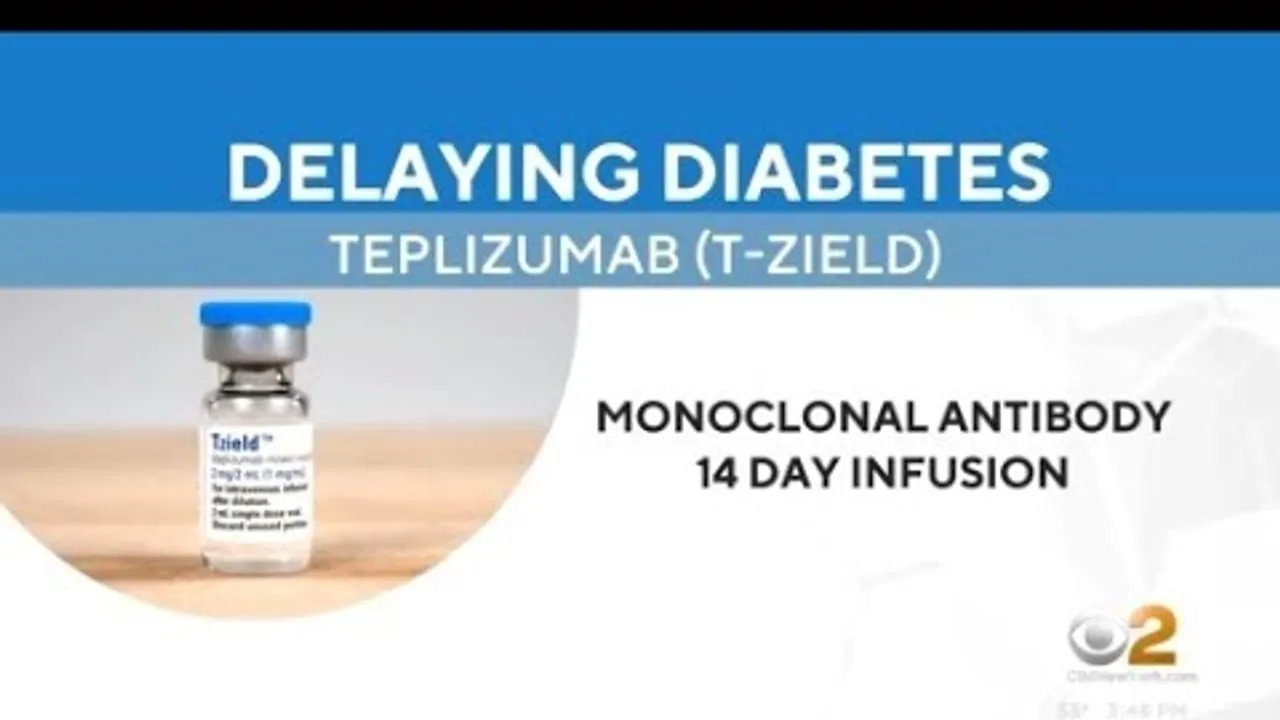
Teplizumab: A Treatment That Delays Type 1 Diabetes Onset
A newly approved monoclonal antibody can delay when Type 1 diabetes develops in people at high risk. It buys time without insulin—but it is not a cure.
Evidence label explains the kind of source behind this article (for example peer-reviewed literature vs community video). It is not medical advice.
Key takeaways
- Teplizumab is a monoclonal antibody (a specially designed immune protein) given by IV infusion to delay Type 1 diabetes in high-risk people
- In clinical trials, people who received teplizumab developed diabetes around 4 years after treatment, compared to about 2 years in untreated people—roughly doubling the delay
- The treatment is for people whose blood tests show diabetes-related antibodies and who have a high risk of developing Type 1 diabetes
- Teplizumab delays diabetes onset but does not prevent or cure Type 1 diabetes; most people who receive it eventually develop the disease
What Is Teplizumab?
Teplizumab is a monoclonal antibody—a protein designed in the lab to work with your immune system. It is given as an intravenous infusion (IV, through a vein). The drug targets the immune system process that mistakenly attacks the insulin-producing cells in the pancreas. Unlike insulin therapy, teplizumab does not replace lost function. Instead, it aims to slow down the destruction of those cells.
How Does It Work in Practice?
Teplizumab is designed for people identified as high-risk through blood tests that detect diabetes-related antibodies. Clinical trials showed that people receiving teplizumab developed Type 1 diabetes in approximately 4 years, compared to about 2 years in people who did not receive treatment. This means teplizumab roughly doubled the time before diabetes appeared.
What Teplizumab Does—and Does Not Do
Teplizumab delays the onset of Type 1 diabetes. It is not a cure. The drug provides additional years without requiring insulin therapy, which can allow time for planning, education, and life decisions. However, it does not stop the disease from developing. People who receive teplizumab may eventually develop Type 1 diabetes and need to start insulin therapy. The difference is that this timeline is extended.
Why This Matters
Type 1 diabetes continues to rise in the United States. While newer insulins and delivery methods have made daily management easier, researchers see delaying disease onset as an important step forward. Teplizumab represents the first FDA-approved treatment designed specifically to postpone Type 1 diabetes in people at high risk.
Evidence label
Source: YouTube community video. Evidence type: Community video — lay discussion, not peer-reviewed research. Type1Cure is an information and intelligence hub, not a medical advice service. This article summarizes published research and does not provide diagnosis, treatment, or personal medical guidance. Always talk to your own care team before changing anything about your Type 1 diabetes management.
Type1Cure is an information and intelligence hub, not a medical advice service. This article summarizes published research and does not provide diagnosis, treatment, or personal medical guidance. Always talk to your own care team before changing anything about your Type 1 diabetes management.
Related reading
More evidence-labeled coverage across the Type1Cure library.
- Cure ResearchWhat Are Disease-Modifying Therapies for Type 1 Diabetes?Video report, corroborated with 5 indexed studies
- Cure ResearchBeyond Insulin: Why Researchers Are Exploring New Approaches to Type 1 DiabetesVideo report, corroborated with 5 indexed studies
- Cure ResearchUnderstanding Disease-Modifying Therapies: What JDRF is Working TowardVideo report, corroborated with 5 indexed studies
- Cure ResearchStem Cell Research Offers New Hope—But Questions RemainCommunity video — lay discussion, not peer-reviewed research
- Cure ResearchWhat Science Now Knows About Beta Cell Regeneration in Type 1 DiabetesCommunity video — lay discussion, not peer-reviewed research
- Cure ResearchWhat We Know About Beta Cell Regeneration Research in DiabetesCommunity video — lay discussion, not peer-reviewed research