New Trial Tests Automated Insulin Delivery During Pregnancy Planning and Pregnancy
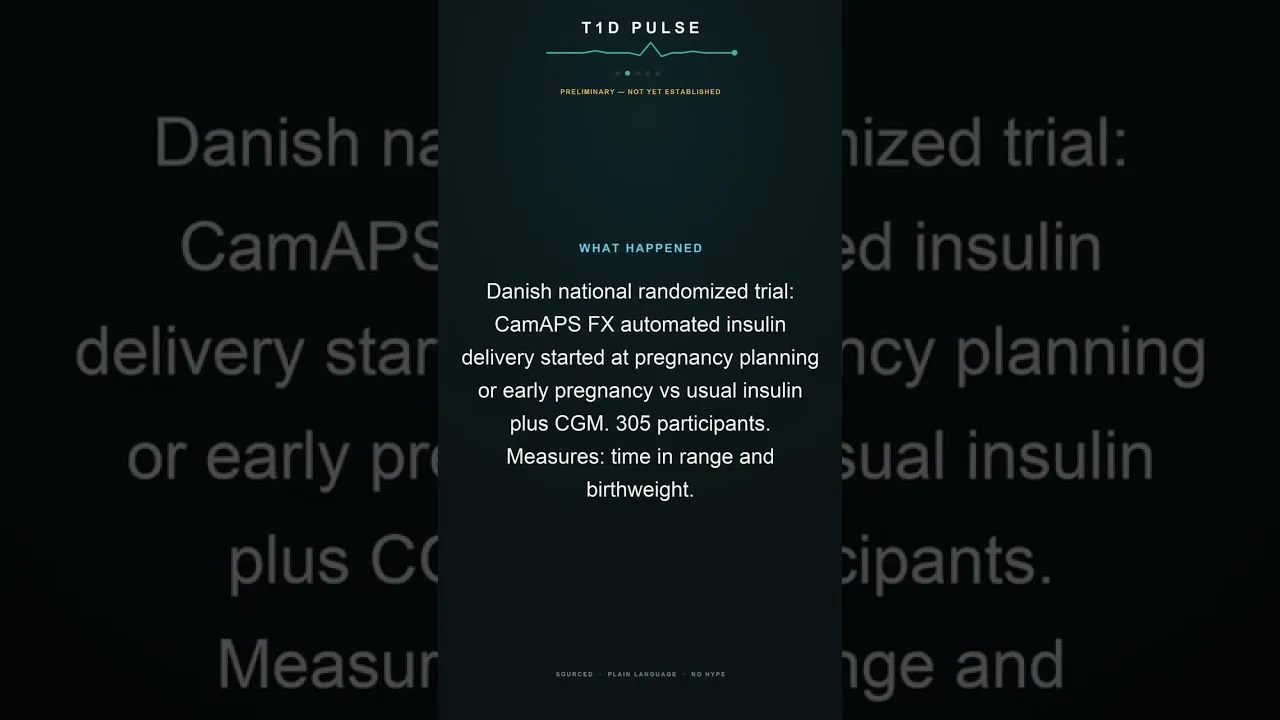
Researchers are enrolling over 300 women with Type 1 diabetes to see if an automated insulin pump system called CamAPS FX helps improve blood sugar control and fetal health during pregnancy.
Evidence label explains the kind of source behind this article (for example peer-reviewed literature vs community video). It is not medical advice.
Key takeaways
- CamAPS FX is an automated insulin delivery (AID) system being tested in pregnant women with Type 1 diabetes for the first time in a large trial
- The study compares AID use to standard insulin treatment combined with continuous glucose monitoring (CGM)
- Primary goals are to measure time spent in healthy blood sugar range and newborn birthweight
- This is an active, ongoing trial with no results available yet—expect data in coming years
- The trial is enrolling 305 women across multiple centers in a national study
Why Pregnancy and Type 1 Diabetes Prompted This Study
Pregnancy with Type 1 diabetes requires careful blood sugar management. Both the pregnant person and the developing baby benefit when blood glucose stays within healthy targets, yet achieving and maintaining this control can be challenging during pregnancy.
Automated insulin delivery systems like CamAPS FX adjust insulin doses automatically based on continuous glucose readings—potentially offering a new way to help pregnant women reach their targets. However, this technology has not been thoroughly tested during pregnancy planning and early pregnancy until now.
What the CamAPS FX Trial Is Studying
This is a randomized controlled trial, the gold standard for testing whether a treatment works. Women are divided into two groups: one using CamAPS FX, and another using standard insulin treatment plus CGM.
The trial enrolls 305 participants and began in 2026. Women can start the system either while planning pregnancy or early in pregnancy, allowing researchers to see how AID affects outcomes across both phases.
The main outcomes being measured are how much time women spend in their target blood sugar range and the birthweight of newborns in each group. These are practical measures of both maternal control and fetal health.
When to Expect Results
This trial is currently active and enrolling participants. No results have been published or released yet. Pregnancy trials take time to complete—researchers must follow women through pregnancy and delivery, then analyze the data.
Families and healthcare providers interested in this study should watch for updates on the trial registry (NCT07240012 on clinicaltrials.gov) or watch for published results in medical journals over the coming years.
What This Means for Your Care
If you are a woman with Type 1 diabetes planning pregnancy or currently pregnant, talk with your care team about what tools and technologies are right for you—whether that includes CGM, insulin pumps, automated systems, or other options.
This trial may eventually provide evidence to help you and your doctor make informed decisions. Until results are available, your healthcare provider remains the best source for personalized guidance on managing Type 1 diabetes during pregnancy.
Evidence label
Origin: T1D Pulse (Video report). Evidence: Video report — unverified, pending corroboration. Type1Cure is an information and intelligence hub, not a medical advice service. This article summarizes published research and does not provide diagnosis, treatment, or personal medical guidance. Always talk to your own care team before changing anything about your Type 1 diabetes management.
Type1Cure is an information and intelligence hub, not a medical advice service. This article summarizes published research and does not provide diagnosis, treatment, or personal medical guidance. Always talk to your own care team before changing anything about your Type 1 diabetes management.
Related reading
More evidence-labeled coverage across the Type1Cure library.
- Living With T1DWhat We're Learning About Diabetic Ketoacidosis in Type 1 Diabetes: A French StudyPubMed indexed literature
- Living With T1DHow Automated Insulin Delivery Systems Work and What the Research ShowsVideo report, corroborated with 5 indexed studies
- Living With T1DCorrection to "The Use of an Automated Insulin Delivery System Is Associated With a Reduction in Diabetes Distress and Improvement in Quality of Life in People With Type 1 Diabetes".PubMed indexed literature
- Living With T1DA New Class of Biologics Could Change How We Treat Type 1 DiabetesPubMed indexed literature
- Living With T1DNew Trials Test Fully Closed Loop Insulin Systems That Could Eliminate Carb CountingVideo report, corroborated with 2 indexed studies
- Living With T1DMenopause and Type 1 Diabetes: What Women Need to KnowPubMed indexed literature