How Automated Insulin Delivery Is Changing Type 1 Diabetes Management
New research shows that closed-loop insulin systems help people with Type 1 diabetes spend more time in healthy glucose ranges. These systems are proving effective across different ages and life stages, from pregnancy to older adults.
Evidence label explains the kind of source behind this article (for example peer-reviewed literature vs community video). It is not medical advice.
Key takeaways
- Automated insulin delivery systems help people spend about 11-12% more time in their target glucose range compared to standard insulin therapy
- Pregnant women using closed-loop systems achieved 68% time in target range versus 56% with standard care
- Older adults saw significant reductions in dangerously low blood sugar events when using hybrid closed-loop systems
- These systems ease the mental burden of constant carb counting and insulin calculations that comes with daily Type 1 diabetes management
- Technology is improving glucose control while enhancing quality of life and patient confidence in diabetes care
What Automated Insulin Delivery Does
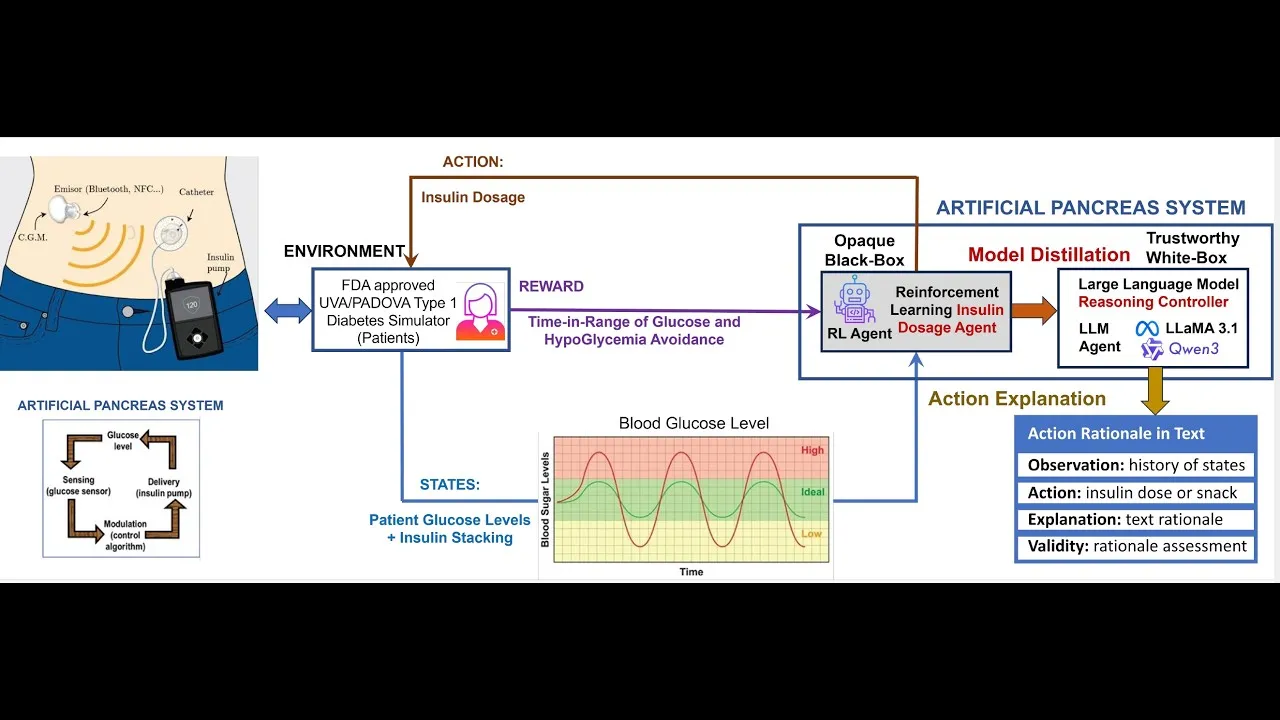
Living with Type 1 diabetes involves constant mental math: counting carbohydrates, calculating insulin doses, and planning ahead for exercise, stress, and timing changes. Automated insulin delivery (AID) systems—also called closed-loop systems—aim to lighten this daily load by automating insulin adjustments based on continuous glucose monitor readings.
These systems work like a co-pilot, using algorithms to predict glucose trends and deliver insulin doses automatically throughout the day and night. Unlike older insulin pump systems, closed-loop systems make real-time adjustments without requiring manual bolus entries for every meal or activity.
The Evidence: Better Time in Range
A comprehensive review of 65 randomized clinical trials involving over 3,600 people with Type 1 diabetes found that AID systems resulted in approximately 11.74% more time in the target glucose range compared to standard insulin therapy. This improvement held across different system designs, though some systems showed larger gains than others.
The improvements went beyond just time in range. Research also found improvements in other measures of glucose control, including reduced time spent in dangerously low glucose levels, particularly for people who already had good baseline glucose control or had lived with diabetes for more than 20 years.
Pregnancy and Older Age: Where the Need Is Greatest
Pregnant women with Type 1 diabetes face unique challenges in managing their blood sugar. A 124-person randomized trial found that pregnant women using hybrid closed-loop systems spent 68% of the time in their pregnancy-specific target glucose range, compared to 56% for those using standard insulin therapy with continuous glucose monitoring. They also spent significantly less time with high blood sugar levels.
Older adults with Type 1 diabetes face particular risk from dangerously low blood sugar episodes. A trial in people aged 65 and older showed that hybrid closed-loop systems reduced time spent below 70 mg/dL by roughly one percentage point compared to standard pump therapy—a meaningful improvement in preventing serious hypoglycemic events. Participants also spent nearly 9% more time in their target glucose range.
Quality of Life and What's Still Being Studied
Beyond glucose numbers, research shows that automated insulin delivery systems improve patient satisfaction and confidence in diabetes management. By reducing the mental burden of constant calculations and decisions, these technologies give people more freedom and flexibility in their daily lives.
Researchers continue to explore new frontiers in AID technology. Current studies are testing fully closed-loop systems that combine insulin with other hormones, and examining whether artificial intelligence and language models can make insulin dosing decisions more transparent and understandable to patients. The goal remains consistent: better glucose control with less daily burden.
Evidence label
Origin: YouTube / Maya Sarkar (Video report). Evidence: Video report, corroborated with 6 indexed studies. Type1Cure is an information and intelligence hub, not a medical advice service. This article summarizes published research and does not provide diagnosis, treatment, or personal medical guidance. Always talk to your own care team before changing anything about your Type 1 diabetes management.
Type1Cure is an information and intelligence hub, not a medical advice service. This article summarizes published research and does not provide diagnosis, treatment, or personal medical guidance. Always talk to your own care team before changing anything about your Type 1 diabetes management.
Related reading
More evidence-labeled coverage across the Type1Cure library.
- Living With T1DCorrection to "The Use of an Automated Insulin Delivery System Is Associated With a Reduction in Diabetes Distress and Improvement in Quality of Life in People With Type 1 Diabetes".PubMed indexed literature
- Living With T1DMenopause and Type 1 Diabetes: What Women Need to KnowPubMed indexed literature
- Living With T1DWhat Continuous Glucose Monitors Can and Can't Do for Type 1 DiabetesVideo report, corroborated with 5 indexed studies
- Living With T1DThe Promise and Challenge of Oral Insulin: Where the Research StandsPubMed indexed literature
- Living With T1DYour Glucose Range May Not Be the Guideline Range—And That's Worth UnderstandingPubMed indexed literature
- Living With T1DInsulin Pump vs. Daily Injections: What Does Research Show for Kids with Type 1 Diabetes?PubMed indexed literature