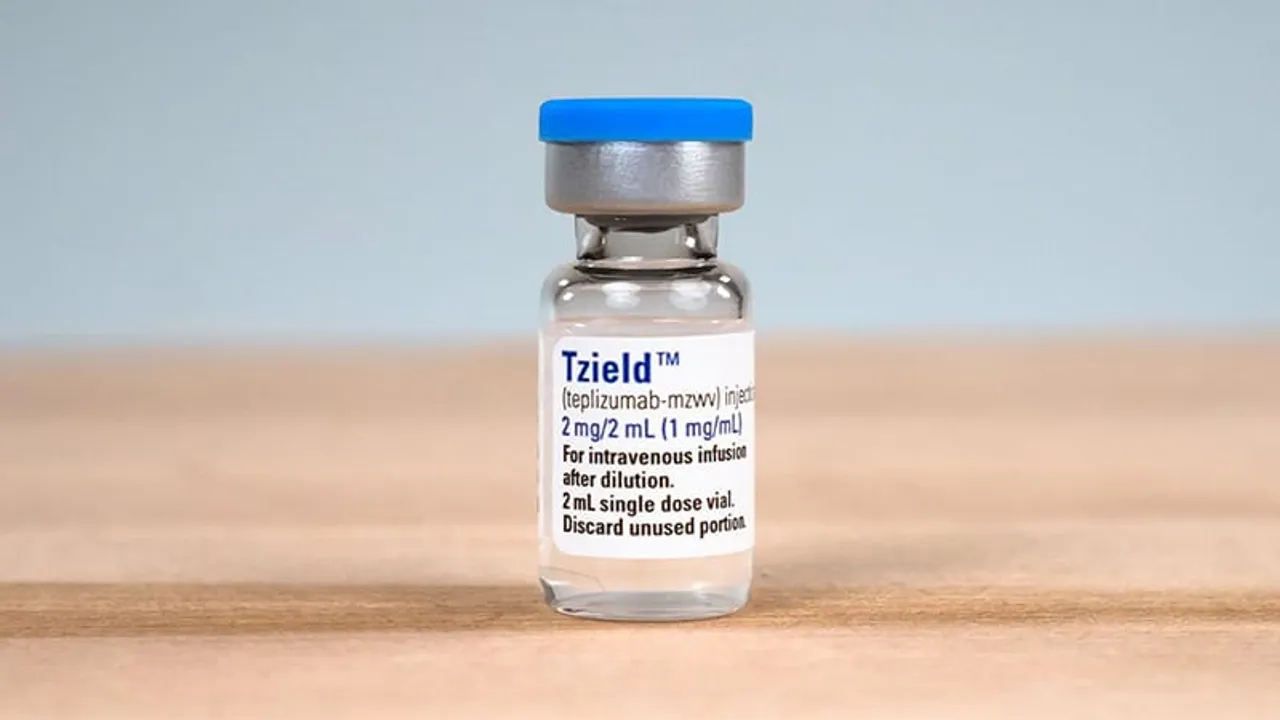
UK Approves First Immunotherapy to Delay Type 1 Diabetes Onset
Teplizumab (Tzield) is now available in the UK for children aged 8 and older and adults in early-stage Type 1 diabetes. The drug can delay progression to symptomatic diabetes by around 3 years on average.
Evidence label explains the kind of source behind this article (for example peer-reviewed literature vs community video). It is not medical advice.
Key takeaways
- Teplizumab targets the root cause of Type 1 diabetes by slowing the immune system's attack on insulin-producing cells.
- The drug is approved for stage 2 T1D—the early, symptom-free stage—before blood glucose problems develop.
- Delaying progression means patients can stay off insulin treatment and avoid daily management tasks for several years longer.
- The MHRA approval applies to children aged 8 years and older and adults at high risk of rapid progression.
- This is the first immunotherapy licensed in the UK specifically designed to prevent or delay Type 1 diabetes onset.
A New Approach to Type 1 Diabetes
The UK's Medicines and Healthcare products Regulatory Agency (MHRA) has approved teplizumab (Tzield, manufactured by Aventis Pharma Limited) as the country's first immunotherapy for Type 1 diabetes. Unlike insulin and other treatments that manage blood sugar once diabetes has developed, teplizumab works differently: it targets the immune system itself to slow the destruction of insulin-producing cells in the pancreas.
Type 1 diabetes is an autoimmune condition in which the body's immune system mistakenly attacks the beta cells in the pancreas that make insulin. Teplizumab is designed to interrupt this attack, which allows the pancreas to preserve its remaining insulin-producing capacity for longer.
Who Can Use Teplizumab?
Teplizumab is licensed for people in stage 2 Type 1 diabetes—a pre-symptomatic phase in which the immune attack has begun but blood glucose problems have not yet emerged. The drug is approved for children aged 8 years and older and adults identified as being at high risk of rapid progression to symptomatic diabetes.
Identifying people in this early stage requires specific screening and genetic testing. Not everyone with Type 1 diabetes is a candidate; the drug is intended for those whose immune markers and genetic profile suggest they will develop symptomatic disease soon.
What the Evidence Shows
Clinical trials showed that teplizumab delayed the onset of symptomatic Type 1 diabetes by an average of 3 years in people at high risk. This means that on average, individuals who received the drug remained free from blood glucose problems and the need for insulin treatment for approximately 3 years longer than those who did not receive it.
The benefit is significant for patients' day-to-day life. By delaying progression, people can avoid or postpone insulin injections, carbohydrate counting, frequent blood glucose monitoring, and the risk of hypoglycaemic episodes. Delaying onset may also allow patients—particularly children—to manage the condition better and with greater maturity if diagnosis does occur later.
Type 1 Diabetes in the UK
Type 1 diabetes is the most common type of diabetes in children and young people in the UK. Approximately 400,000 people in the UK have Type 1 diabetes, representing about 8% of all people with diabetes. The UK has one of the highest rates of Type 1 diabetes in Western Europe, with an incidence of approximately 193.8 per 100,000 in younger age groups.
Once symptomatic diabetes develops (stage 3), people typically require lifelong insulin treatment and daily blood glucose management. The MHRA approval of teplizumab offers a new option for eligible patients diagnosed in the earlier stage, potentially changing the trajectory of the disease for some.
How the Approval Came About
The MHRA granted approval to teplizumab through its international recognition procedure, which allows the regulatory agency to evaluate medicines using expertise and decisions from trusted regulatory partners. Teplizumab was approved by the U.S. Food and Drug Administration (FDA) in 2022 following clinical trial evidence. The MHRA's approval extends this evidence-based authorization to UK patients and healthcare providers.
Evidence label
Origin: medscape.com (News report). Evidence: News report — unverified, pending corroboration. Type1Cure is an information and intelligence hub, not a medical advice service. This article summarizes published research and does not provide diagnosis, treatment, or personal medical guidance. Always talk to your own care team before changing anything about your Type 1 diabetes management.
Type1Cure is an information and intelligence hub, not a medical advice service. This article summarizes published research and does not provide diagnosis, treatment, or personal medical guidance. Always talk to your own care team before changing anything about your Type 1 diabetes management.
Related reading
More evidence-labeled coverage across the Type1Cure library.
- Cure & AdvancementsCell Replacement Therapy: A New Frontier in Type 1 Diabetes ResearchVideo report, corroborated with 5 indexed studies
- Cure & AdvancementsWhy Beta Cells Die in Type 1 Diabetes While Alpha Cells SurviveNews report, corroborated with 2 indexed studies
- Cure & AdvancementsEarly Trial Shows Some People with Type 1 Diabetes Can Reduce or Stop Insulin—Here's What We KnowNews report, corroborated with 3 indexed studies
- Cure & AdvancementsBeta Cell Therapy: Moving From Lab Promise to Real-World TreatmentVideo report, corroborated with 2 indexed studies
- Cure & AdvancementsUnderstanding the Eleodon Trial: What Early Results ShowVideo report — unverified, pending corroboration
- Cure & AdvancementsIslet Cell Therapies Advance: What You Need to KnowNews report, corroborated with 3 indexed studies