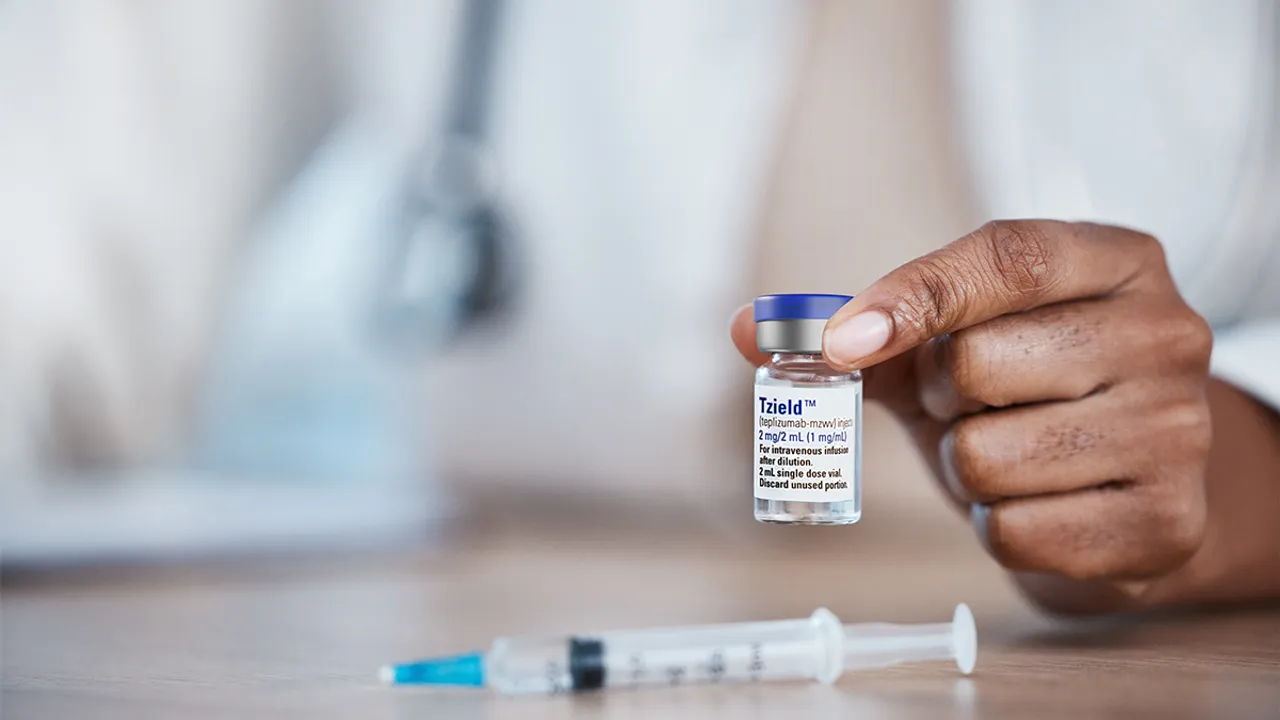
Tzield Now Approved for Newly Diagnosed Type 1 Diabetes in Young People
The FDA has expanded approval of Tzield to stage 3 type 1 diabetes, making it the first disease-modifying therapy available to children and teens shortly after diagnosis. The drug works by preserving the body's insulin-producing cells.
Evidence label explains the kind of source behind this article (for example peer-reviewed literature vs community video). It is not medical advice.
Key takeaways
- Tzield is now approved for people aged 8-17 with newly diagnosed type 1 diabetes (stage 3), if diagnosed within the last 8 weeks
- Clinical trials show Tzield helps preserve beta cells, the insulin-producing cells the immune system attacks in type 1 diabetes
- People treated with Tzield had better outcomes including improved blood sugar control, less hypoglycemia, and lower insulin requirements
- Tzield is not a cure—it delays disease progression and slows the loss of beta cell function
What Is Tzield and How Does It Work?
Tzield (teplizumab) is a disease-modifying therapy that helps preserve the insulin-producing cells in the pancreas. In type 1 diabetes, the immune system mistakenly attacks these beta cells, gradually destroying them. Tzield works by targeting immune cells involved in this attack, helping to slow or delay the destruction of beta cells.
The drug is given as an intravenous infusion over two separate 12-day courses. It was first approved by the FDA in 2022 to delay the onset of stage 3 type 1 diabetes in people aged 8 and older who had stage 2 diabetes—an early stage with no obvious symptoms. Now it has been approved for use in stage 3, meaning people recently diagnosed with clinical type 1 diabetes can access it.
Who Can Receive Tzield?
Tzield is approved for children and adolescents aged 8-17 with stage 3 type 1 diabetes who were diagnosed within the last 8 weeks. This narrow window means treatment should begin soon after diagnosis. A prescription is required, and the therapy will be administered in clinical settings.
The FDA granted approval through its accelerated approval pathway, which means the agency determined the drug is safe and reasonably likely to provide clinical benefit based on available evidence. Additional clinical studies are ongoing to confirm these benefits over time.
What Did Clinical Trials Show?
The PROTECT clinical trial demonstrated that Tzield could safely and effectively preserve beta cell function in newly diagnosed children and adolescents. Patients treated with Tzield had significantly higher levels of C-peptide—a marker of insulin production—compared to those receiving placebo at 78 weeks.
In the trial, 94.9% of patients treated with Tzield maintained clinically meaningful beta cell function, compared to 79.2% of those receiving placebo. Real-world benefits included improved HbA1c levels (a measure of long-term blood sugar control), more time spent in target glucose range, less hypoglycemia, and reduced insulin requirements.
What Are the Side Effects?
Tzield was generally well tolerated in clinical trials. The most common side effects included lymphopenia (low white blood cell count), rash, and headache. Most adverse events occurred during and after the first few weeks of treatment and resolved without intervention.
An integrated safety analysis of over 1,000 patients showed the side effect profile was consistent across multiple trials. As with any therapy, patients should discuss potential risks and benefits with their healthcare team.
What This Means for the Type 1 Diabetes Community
Tzield's approval for stage 3 diabetes represents the first disease-modifying therapy available to people at or near the time of clinical diagnosis. Because preserving beta cell function is linked to better diabetes outcomes, this offers a new option for families facing a recent type 1 diabetes diagnosis.
It is important to note that Tzield delays disease progression—it does not cure type 1 diabetes. People who receive Tzield will still have type 1 diabetes and will need to continue managing their blood sugar with insulin and other diabetes care tools. Clinical trials are ongoing to gather more information about long-term effects.
Evidence label
Origin: breakthrought1d.org (News report). Evidence: News report, corroborated with 5 indexed studies. Type1Cure is an information and intelligence hub, not a medical advice service. This article summarizes published research and does not provide diagnosis, treatment, or personal medical guidance. Always talk to your own care team before changing anything about your Type 1 diabetes management.
Type1Cure is an information and intelligence hub, not a medical advice service. This article summarizes published research and does not provide diagnosis, treatment, or personal medical guidance. Always talk to your own care team before changing anything about your Type 1 diabetes management.
Related reading
More evidence-labeled coverage across the Type1Cure library.
- Cure & AdvancementsCell Replacement Therapy: A New Frontier in Type 1 Diabetes ResearchVideo report, corroborated with 5 indexed studies
- Cure & AdvancementsWhy Beta Cells Die in Type 1 Diabetes While Alpha Cells SurviveNews report, corroborated with 2 indexed studies
- Cure & AdvancementsEarly Trial Shows Some People with Type 1 Diabetes Can Reduce or Stop Insulin—Here's What We KnowNews report, corroborated with 3 indexed studies
- Cure & AdvancementsBeta Cell Therapy: Moving From Lab Promise to Real-World TreatmentVideo report, corroborated with 2 indexed studies
- Cure & AdvancementsUnderstanding the Eleodon Trial: What Early Results ShowVideo report — unverified, pending corroboration
- Cure & AdvancementsIslet Cell Therapies Advance: What You Need to KnowNews report, corroborated with 3 indexed studies