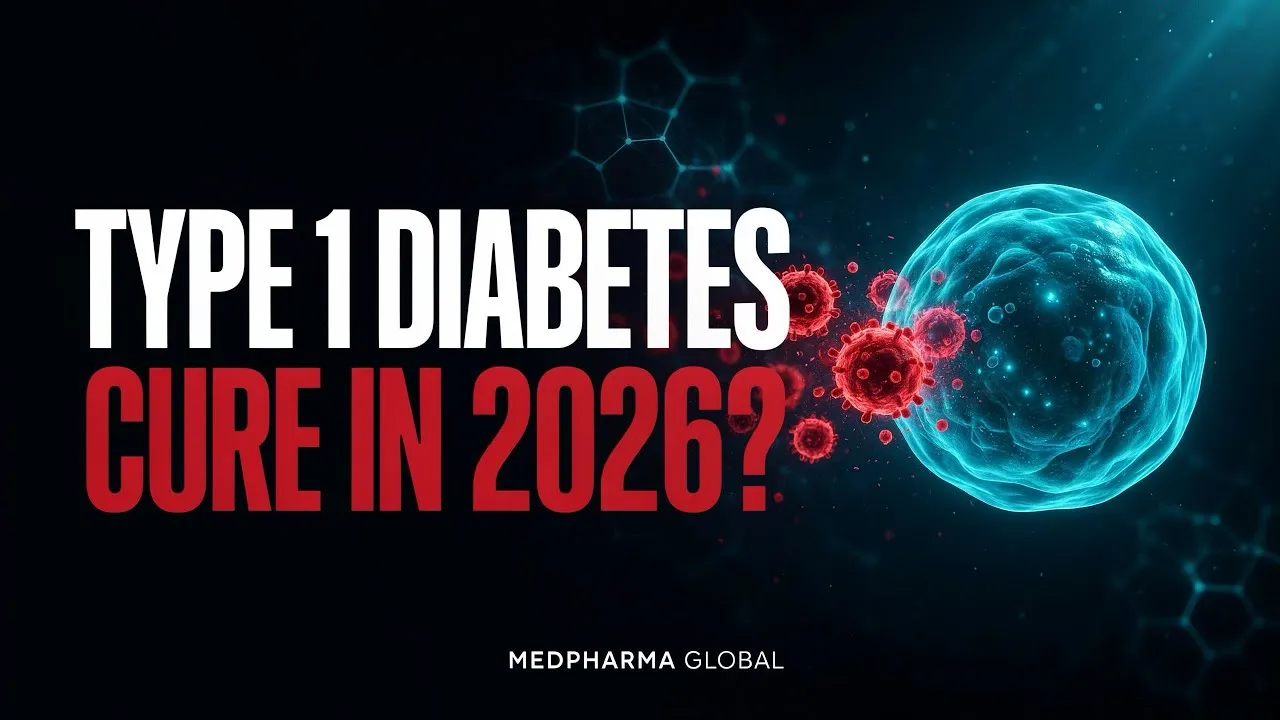
The Race for Type 1 Diabetes Solutions: Where Science Stands in 2026
Stem cell therapies and immune engineering are showing real promise in early trials, with some patients reaching insulin independence. But significant hurdles remain before these approaches become widely available.
Evidence label explains the kind of source behind this article (for example peer-reviewed literature vs community video). It is not medical advice.
Key takeaways
- Stem cell-derived insulin-producing cells have helped some patients achieve insulin independence in early clinical trials, though this is not yet a widely available treatment
- Scientists are working on multiple strategies—including cell encapsulation and gene editing—to protect transplanted cells from immune rejection
- The biggest remaining challenges are manufacturing consistency, ensuring cells mature properly, and reducing the need for immunosuppressive medications
- A 'functional cure' that restores the body's natural ability to produce insulin remains a goal, not yet a reality for most patients
Why Type 1 Diabetes Is So Hard to Cure
Type 1 diabetes is an autoimmune disease: the body's immune system mistakenly attacks the beta cells in the pancreas that produce insulin. Even if scientists can replace those lost cells, the immune system may attack them again. This dual challenge—replacing cells and preventing immune rejection—is why finding a cure has proven so difficult, despite decades of research.
Stem Cell Therapy: Early Promise in Clinical Trials
One of the most encouraging advances involves growing insulin-producing beta cells from pluripotent stem cells in the laboratory. Researchers have developed protocols based on how the pancreas naturally develops during fetal life, allowing them to create mature, functional beta cells that closely resemble the real thing.
In preclinical studies using mice and nonhuman primates, transplanting these stem cell-derived islets reversed high blood sugar with a good safety profile. Early-phase human clinical trials have now shown that this approach is both safe and effective—and importantly, some patients with long-standing Type 1 diabetes achieved insulin independence. Researchers call this a 'functional cure,' meaning the transplanted cells are producing enough insulin to eliminate the need for insulin injections.
The Immune Challenge Remains Central
Despite these encouraging results, a major hurdle persists: immune rejection. Even when transplanting cells from a patient's own stem cells (autologous transplants), the immune system can still attack and destroy the new beta cells. This means most patients receiving these therapies currently need to take immunosuppressive medications to protect their transplanted cells—a significant limitation that researchers are actively working to overcome.
Scientists are pursuing several strategies to address this problem. Cell encapsulation—wrapping transplanted cells in a protective material that allows insulin and nutrients to pass through but blocks immune attack—is one approach. Gene editing represents another, with researchers designing cells that might evade immune recognition without requiring broad immunosuppression.
Remaining Obstacles Before Wide Availability
Moving from promising early trials to a treatment available to most patients requires solving several complex problems. Manufacturing consistency is one: producing large batches of stem cell-derived beta cells that meet the same quality and maturity standards remains challenging. Scientists are also working to reduce batch-to-batch variability and to ensure that cells produced for one patient can be reliably produced for thousands more.
The need to continue immunosuppressive therapy is another barrier. While some patients in trials have achieved insulin independence, reducing or eliminating the requirement for immune-suppressing drugs remains a critical goal. Without solving this problem, stem cell therapies may help patients but not provide the complete solution many are hoping for.
Looking Forward: What 'Functional Cure' Means Today
When researchers describe a 'functional cure' for Type 1 diabetes, they mean that transplanted cells are producing enough insulin to eliminate or greatly reduce the need for insulin injections. This is genuinely significant progress—but it is different from a traditional cure that would restore the body's own immune system to normal and eliminate all need for ongoing treatment or medication.
As of 2026, no cure is yet widely available to the general Type 1 diabetes community. However, the combination of stem cell advances, immune engineering strategies, and ongoing clinical trials suggests that more effective treatment options may eventually reach patients. The next phase of research will focus on addressing manufacturing challenges, improving immune protection, and determining which patients are best suited for these emerging therapies.
Evidence label
Origin: Medpharm Global (Video report). Evidence: Video report, corroborated with 1 indexed study. Type1Cure is an information and intelligence hub, not a medical advice service. This article summarizes published research and does not provide diagnosis, treatment, or personal medical guidance. Always talk to your own care team before changing anything about your Type 1 diabetes management.
Type1Cure is an information and intelligence hub, not a medical advice service. This article summarizes published research and does not provide diagnosis, treatment, or personal medical guidance. Always talk to your own care team before changing anything about your Type 1 diabetes management.
Related reading
More evidence-labeled coverage across the Type1Cure library.
- Cure & AdvancementsCell Replacement Therapy: A New Frontier in Type 1 Diabetes ResearchVideo report, corroborated with 5 indexed studies
- Cure & AdvancementsWhy Beta Cells Die in Type 1 Diabetes While Alpha Cells SurviveNews report, corroborated with 2 indexed studies
- Cure & AdvancementsEarly Trial Shows Some People with Type 1 Diabetes Can Reduce or Stop Insulin—Here's What We KnowNews report, corroborated with 3 indexed studies
- Cure & AdvancementsBeta Cell Therapy: Moving From Lab Promise to Real-World TreatmentVideo report, corroborated with 2 indexed studies
- Cure & AdvancementsUnderstanding the Eleodon Trial: What Early Results ShowVideo report — unverified, pending corroboration
- Cure & AdvancementsIslet Cell Therapies Advance: What You Need to KnowNews report, corroborated with 3 indexed studies