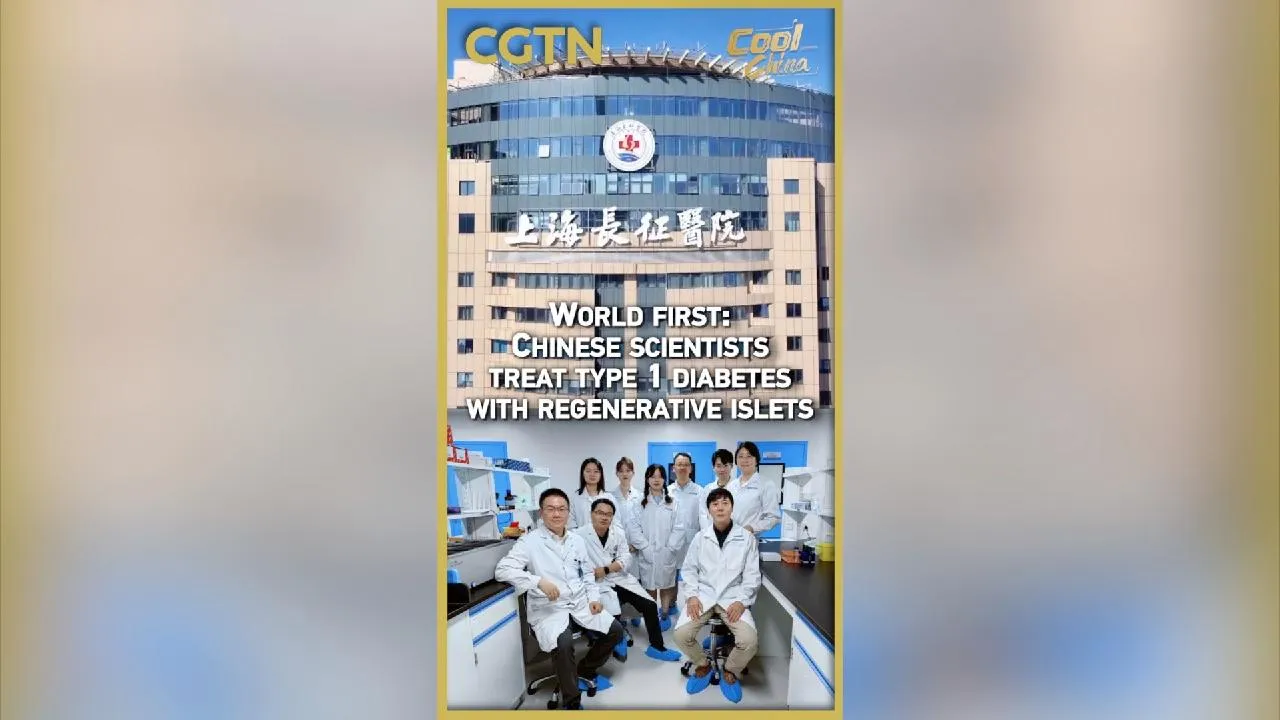
Shanghai researchers speed up insulin-producing cell transplants for type 1 diabetes
Scientists have developed a faster method to grow insulin-secreting islet cells from stem cells, reducing production time from 40 days to 14 days. The approach aims to make regenerative islet transplants safer and more practical for people with type 1 diabetes.
Evidence label explains the kind of source behind this article (for example peer-reviewed literature vs community video). It is not medical advice.
Key takeaways
- Researchers in Shanghai used endoderm stem-cell technology to create insulin-producing islet cells in 14 days instead of 40 days
- Faster cell production may reduce the risk of tumor development during the transplant process
- The findings were published in The Lancet Diabetes & Endocrinology, a peer-reviewed medical journal
- This is described as a world-first regenerative islet transplant approach for type 1 diabetes treatment
A faster path to regenerative islet cells
Scientists at a Shanghai research center have developed a new method to grow insulin-producing islet cells from stem cells in significantly less time. Using endoderm stem-cell technology, the team reduced production time from 40 days to just 14 days—a substantial acceleration that could make regenerative islet transplants more practical and accessible.
Islet cells are the insulin-producing cells in the pancreas that stop functioning properly in type 1 diabetes. Regenerative islet transplants aim to replace or restore these cells to help the body regulate blood sugar naturally.
Why speed matters for cell transplants
The faster production timeline addresses a key safety concern with cell transplants: the longer cells are grown in the laboratory, the greater the potential risk of abnormal cell growth or tumor development. By cutting production time from 40 days to 14 days, this new approach may reduce those risks while making the transplant process more efficient.
The researchers' findings suggest that the endoderm stem-cell method not only accelerates production but maintains the quality and function of the islet cells being created.
What's next
The research was published in The Lancet Diabetes & Endocrinology, one of the leading peer-reviewed journals in diabetes research. As with all early-stage research, further studies will be needed to understand how this approach performs in broader patient populations and to determine the best path toward clinical use.
This development represents one of several ongoing efforts worldwide to advance regenerative therapies for type 1 diabetes, offering hope to patients and families seeking new treatment options.
Evidence label
Origin: news.cgtn.com (News report). Evidence: News report — unverified, pending corroboration. Type1Cure is an information and intelligence hub, not a medical advice service. This article summarizes published research and does not provide diagnosis, treatment, or personal medical guidance. Always talk to your own care team before changing anything about your Type 1 diabetes management.
Type1Cure is an information and intelligence hub, not a medical advice service. This article summarizes published research and does not provide diagnosis, treatment, or personal medical guidance. Always talk to your own care team before changing anything about your Type 1 diabetes management.
Related reading
More evidence-labeled coverage across the Type1Cure library.
- Cure & AdvancementsCell Replacement Therapy: A New Frontier in Type 1 Diabetes ResearchVideo report, corroborated with 5 indexed studies
- Cure & AdvancementsWhy Beta Cells Die in Type 1 Diabetes While Alpha Cells SurviveNews report, corroborated with 2 indexed studies
- Cure & AdvancementsEarly Trial Shows Some People with Type 1 Diabetes Can Reduce or Stop Insulin—Here's What We KnowNews report, corroborated with 3 indexed studies
- Cure & AdvancementsBeta Cell Therapy: Moving From Lab Promise to Real-World TreatmentVideo report, corroborated with 2 indexed studies
- Cure & AdvancementsUnderstanding the Eleodon Trial: What Early Results ShowVideo report — unverified, pending corroboration
- Cure & AdvancementsIslet Cell Therapies Advance: What You Need to KnowNews report, corroborated with 3 indexed studies