Multiple Stem Cell Approaches Show Promise for Reversing New-Onset Type 1 Diabetes in Mice
Recent research demonstrates that engineered stem cells and cell-derived therapies can reverse new-onset type 1 diabetes in mouse models by calming the overactive immune system. These early findings move beyond insulin management toward addressing the root cause of the disease.
Evidence label explains the kind of source behind this article (for example peer-reviewed literature vs community video). It is not medical advice.
Key takeaways
- Researchers have developed several stem cell and bioengineered cell therapies that reversed new-onset type 1 diabetes in mouse models, suggesting a shift from managing blood sugar to repairing immune dysfunction.
- These therapies work by promoting regulatory T cells and suppressing the autoreactive T cells that attack insulin-producing beta cells in the pancreas.
- The approaches include mesenchymal stem cells, engineered extracellular vesicles, and modified platelets—all designed to calm the immune attack on beta cells.
- These are early-stage findings in animals; human trials would be needed to determine if these approaches are safe and effective in people with type 1 diabetes.
A New Direction: Targeting Immune Dysfunction, Not Just Blood Sugar
For decades, people with type 1 diabetes have relied on insulin injections to manage blood sugar levels. While lifesaving, insulin does nothing to stop the immune system from attacking the insulin-producing beta cells in the pancreas. Now, researchers are pursuing a fundamentally different approach: using stem cells and engineered cellular therapies to repair the immune dysfunction that causes the disease in the first place.
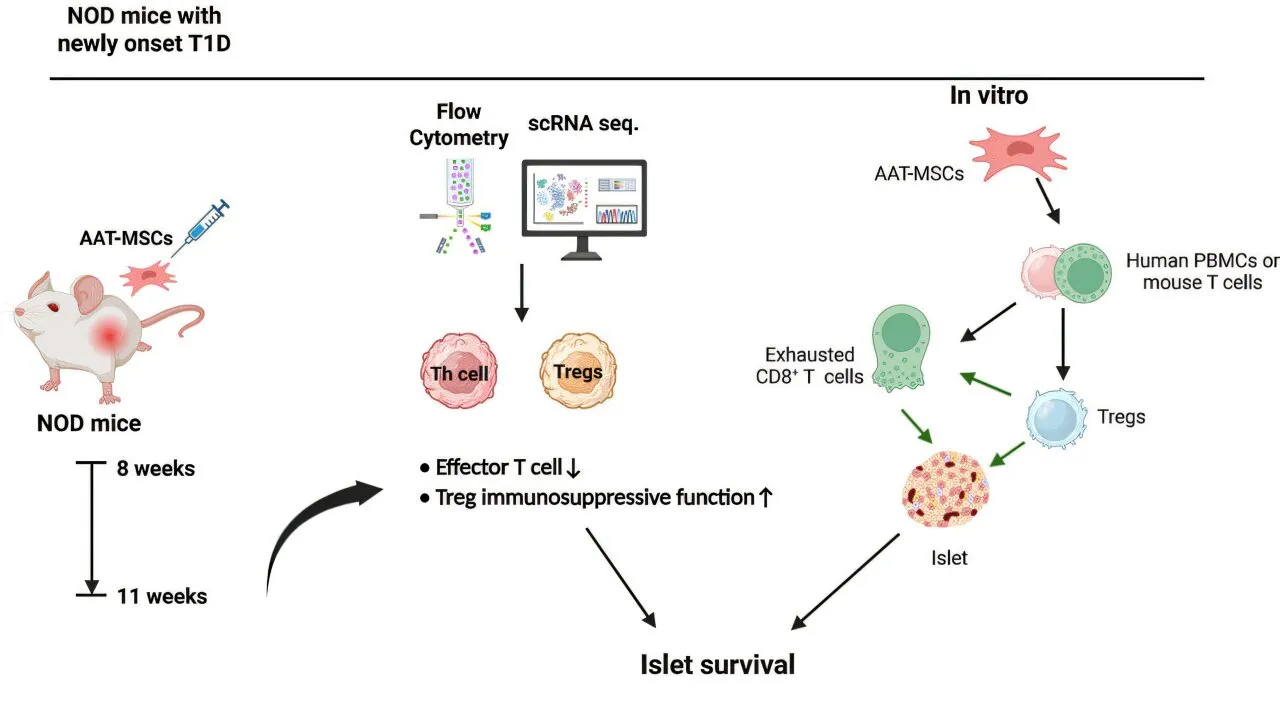
According to researchers at the Medical University of South Carolina, their new stem cell therapy reversed new-onset type 1 diabetes in a mouse model of the disease. As lead researcher Hongjun Wang explained, "This study suggests a new way to treat type 1 diabetes by addressing the root cause—immune system dysfunction—rather than just managing blood sugar."
How These Therapies Work: Calming the Immune Attack
In type 1 diabetes, the immune system mistakenly attacks beta cells, destroying the cells that produce insulin. All four recent studies focus on a similar strategy: restoring immune balance by increasing regulatory T cells (immune cells that suppress harmful inflammation) while reducing autoreactive T cells (the cells doing the attacking).
One approach uses mesenchymal stem cells (MSCs)—adult stem cells naturally equipped to calm inflammation. When engineered to overexpress a protein called alpha-1 antitrypsin, these cells reversed new-onset diabetes in over 50% of treated female mice by promoting regulatory T cell activity and reducing harmful T cell populations in the pancreas.
Other researchers took a different path, engineering macrophage cells and platelets to produce molecular signals that exhaust autoreactive T cells and promote immune tolerance. These engineered particles presented checkpoint ligands—molecular 'off switches' that tell immune cells to stop attacking beta cells. In mouse studies, these approaches preserved beta cell function and prevented progression to hyperglycemia.
What These Studies Show—and What Questions Remain
All four studies demonstrated meaningful results in mouse models of type 1 diabetes, with treatments reversing new-onset disease or preventing progression. These findings are encouraging because they show that immune-based therapies can work at the disease's root cause rather than simply replacing missing insulin.
However, it is important to recognize what these studies do not yet show. These are laboratory and animal studies; human safety and effectiveness remain unknown. Moving from mouse models to people requires extensive clinical testing. Additionally, these therapies represent different engineering strategies, and it is unclear which approach—if any—might eventually reach patients, or how long immune benefits might last.
What This Means for People Living with Type 1 Diabetes
These findings offer hope that the future of type 1 diabetes treatment may extend beyond insulin management. By targeting the immune dysfunction at the heart of the disease, these therapies could potentially offer more lasting protection for beta cells.
For now, people with type 1 diabetes should continue relying on their current treatments, including insulin therapy and blood sugar monitoring. These stem cell and cellular therapies remain experimental and are not yet available outside of research settings. Ongoing clinical research will determine whether any of these approaches eventually become options for patients.
Evidence label
Origin: medicalxpress.com (News report). Evidence: News report, corroborated with 3 indexed studies. Type1Cure is an information and intelligence hub, not a medical advice service. This article summarizes published research and does not provide diagnosis, treatment, or personal medical guidance. Always talk to your own care team before changing anything about your Type 1 diabetes management.
Type1Cure is an information and intelligence hub, not a medical advice service. This article summarizes published research and does not provide diagnosis, treatment, or personal medical guidance. Always talk to your own care team before changing anything about your Type 1 diabetes management.
Related reading
More evidence-labeled coverage across the Type1Cure library.
- Cure & AdvancementsCell Replacement Therapy: A New Frontier in Type 1 Diabetes ResearchVideo report, corroborated with 5 indexed studies
- Cure & AdvancementsWhy Beta Cells Die in Type 1 Diabetes While Alpha Cells SurviveNews report, corroborated with 2 indexed studies
- Cure & AdvancementsEarly Trial Shows Some People with Type 1 Diabetes Can Reduce or Stop Insulin—Here's What We KnowNews report, corroborated with 3 indexed studies
- Cure & AdvancementsBeta Cell Therapy: Moving From Lab Promise to Real-World TreatmentVideo report, corroborated with 2 indexed studies
- Cure & AdvancementsUnderstanding the Eleodon Trial: What Early Results ShowVideo report — unverified, pending corroboration
- Cure & AdvancementsIslet Cell Therapies Advance: What You Need to KnowNews report, corroborated with 3 indexed studies