A New Way to See Beta Cell Loss Could Change How Doctors Track Type 1 Diabetes
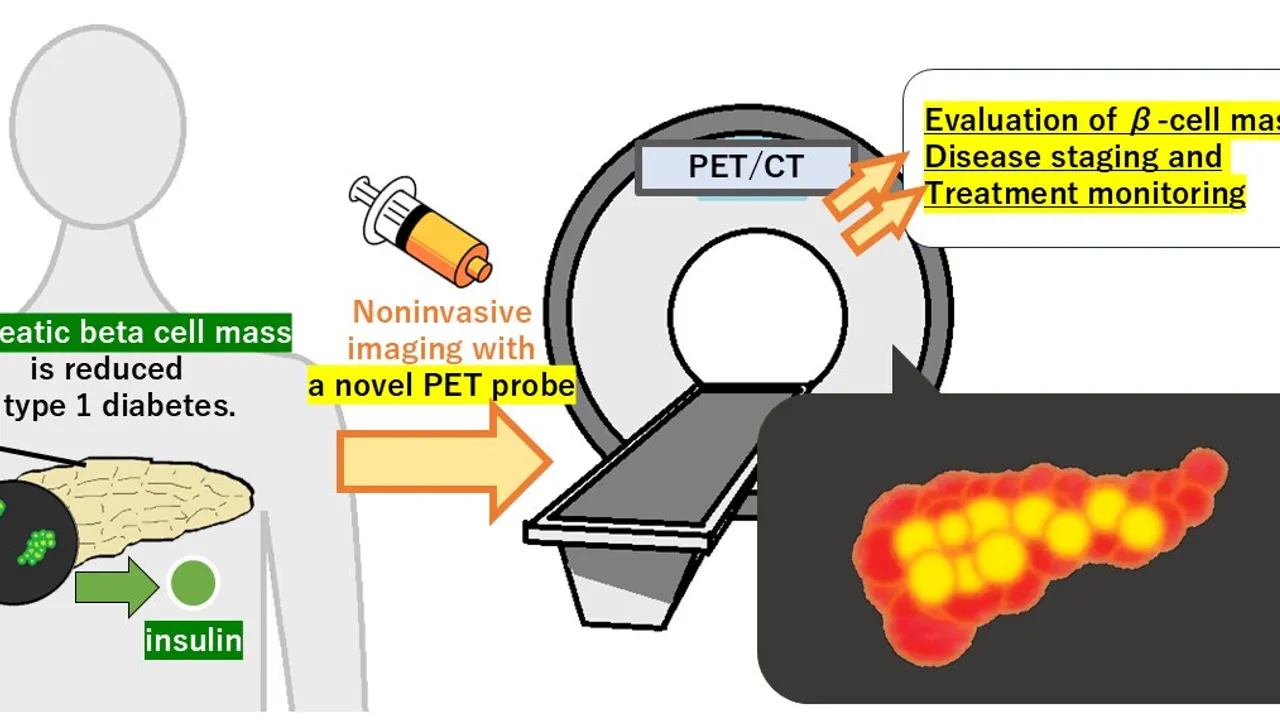
Researchers are testing a PET imaging technique that could directly measure insulin-producing beta cells in the pancreas—something doctors haven't been able to do reliably until now. This breakthrough could help evaluate whether new treatments are actually preserving or restoring these critical cells.
Evidence label explains the kind of source behind this article (for example peer-reviewed literature vs community video). It is not medical advice.
Key takeaways
- Current methods for measuring beta cell loss rely on indirect blood tests that can be unreliable as type 1 diabetes progresses
- A new PET imaging tracer called [18F]FB(ePEG12)12-exendin-4 may allow doctors to directly and non-invasively see how many beta cells remain
- Being able to measure beta cell mass accurately could help researchers and doctors determine whether new therapies are actually working
- This imaging approach addresses a major gap in type 1 diabetes research and care
Why Measuring Beta Cells Matters
In type 1 diabetes, the immune system gradually destroys the beta cells in the pancreas that produce insulin. As these cells are lost, the body can no longer regulate blood sugar effectively. Preserving the remaining beta cells—or finding ways to restore them—is a central goal for new type 1 diabetes treatments.
But here's the problem: doctors currently have no reliable way to directly measure how many beta cells a person has left. Instead, they rely on indirect blood-based markers that can change based on glucose levels and other factors, making them less accurate as the disease progresses.
A New Imaging Approach
Researchers at Kyoto University investigated whether a PET imaging tracer designed to target the GLP-1 receptor could provide a non-invasive, direct measurement of beta cell mass. The tracer, called [18F]FB(ePEG12)12-exendin-4, was given intravenously to adults with type 1 diabetes in a prospective study conducted at Kyoto University Hospital.
This approach is significant because PET imaging could offer an objective way to see beta cells directly, rather than inferring their presence from blood markers.
What This Could Mean for Treatment
If this imaging technique proves reliable in broader use, it could transform how doctors evaluate whether new therapies aimed at preserving or restoring beta cell mass are actually working. Right now, researchers and clinicians lack this direct measurement tool in routine clinical settings.
According to first author Kentaro Sakaki, 'Our study was driven by a key gap in type 1 diabetes research and care. We hope this approach can help fill that gap by providing an objective readout for therapeutic evaluation.'
Next Steps
The findings have been published in the journal Diabetes. While this research is promising, the imaging technique will need further validation and development before it becomes a standard tool in clinical practice. The goal is to eventually help doctors and patients track whether new type 1 diabetes treatments are preserving or restoring beta cell function over time.
Evidence label
Origin: medicalxpress.com (News report). Evidence: News report — unverified, pending corroboration. Type1Cure is an information and intelligence hub, not a medical advice service. This article summarizes published research and does not provide diagnosis, treatment, or personal medical guidance. Always talk to your own care team before changing anything about your Type 1 diabetes management.
Type1Cure is an information and intelligence hub, not a medical advice service. This article summarizes published research and does not provide diagnosis, treatment, or personal medical guidance. Always talk to your own care team before changing anything about your Type 1 diabetes management.
Related reading
More evidence-labeled coverage across the Type1Cure library.
- Cure & AdvancementsUnderstanding the Eleodon Trial: What Early Results ShowVideo report — unverified, pending corroboration
- Cure & AdvancementsGene-Edited Islets Show Promise, But Long-Term Questions RemainPubMed indexed literature
- Cure & AdvancementsTeplizumab Approved on NHS: What It Means for Early-Stage Type 1 DiabetesNews report, corroborated with 3 indexed studies
- Cure & AdvancementsCan Oral Insulin Given to Infants Prevent Type 1 Diabetes? What the POInT Trial FoundVideo report, corroborated with 1 indexed study
- Cure & AdvancementsInternational Panel Outlines First Framework for Widespread Type 1 Diabetes ScreeningNews report — unverified, pending corroboration
- Cure & AdvancementsFDA-Approved Teplizumab: What We Know About Delaying Type 1 DiabetesVideo report, corroborated with 3 indexed studies