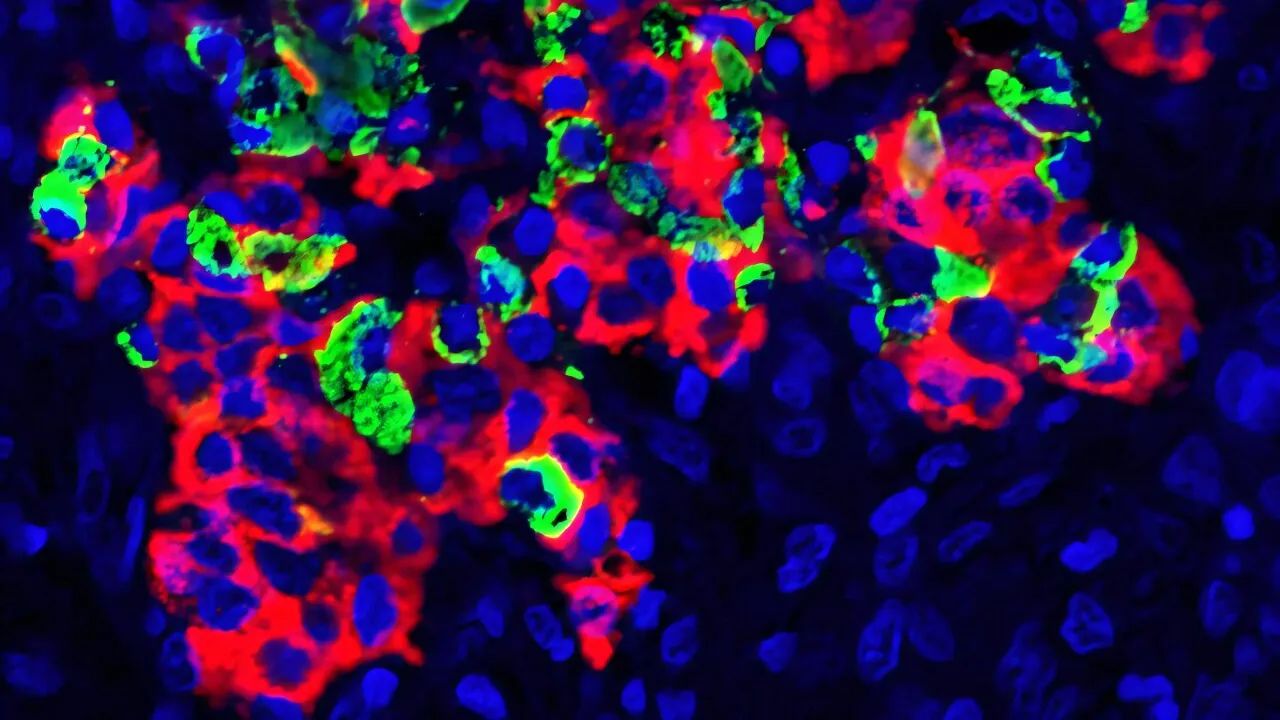
A New Location for Islet Transplants: Why the Spleen Might Change Type 1 Diabetes Treatment
Researchers have successfully transplanted insulin-producing islet cells into the spleen instead of the liver, restoring blood sugar control in animals without requiring heavy immunosuppression. This approach could reduce the burden on patients who rely on islet transplantation to manage Type 1 diabetes.
Evidence label explains the kind of source behind this article (for example peer-reviewed literature vs community video). It is not medical advice.
Key takeaways
- Scientists transplanted insulin-producing islet cells into the spleen using nanoparticles to prepare the tissue, and the cells restored normal blood sugar in diabetic mice, rats, and primates.
- Spleen-based transplants worked without the need for full immunosuppression, a major advantage over current liver-based islet transplantation.
- Traditional liver transplants lose about 70% of transplanted islet cells before they start working, requiring multiple donors per patient.
- This research was conducted in animals; human clinical trials would be the next step to determine if this approach is safe and effective for patients.
The Challenge With Current Islet Transplants
For people with Type 1 diabetes, islet transplantation offers a potential path to reduce or stop insulin injections. The procedure involves taking insulin-producing islet cells from a donor pancreas and placing them into the recipient's body, where they can resume their natural job of controlling blood sugar.
Currently, transplanted islets are placed into the liver through the portal vein, where they settle in small blood vessels. However, this location presents serious problems. The liver's environment—including immune attack, low oxygen, and stiff tissue—destroys roughly 70% of the transplanted cells before they can even begin working. This massive cell loss means patients often need islets from multiple donors to achieve meaningful results, and even then, success rates remain limited.
Why Researchers Looked Elsewhere
Because liver transplantation has such significant drawbacks, scientists have explored other sites in the body for islet placement, including the eye, abdominal lining (omentum), and muscle tissue. Each alternative location has introduced new problems—invasive surgery, poor cell survival, or abnormal patterns of insulin release.
Researchers at Wenzhou Medical University took a different approach. They asked whether the spleen might be a better home for transplanted islets.
How the Spleen-Based Approach Works
The key to making spleen transplantation successful was preparing the tissue first using specially designed nanoparticles. These nanoparticles remodeled the spleen's environment before the islet cells were transplanted, creating conditions more favorable for cell survival and function.
In studies, this method restored normal blood sugar control in diabetic rodents and also in cynomolgus macaques (primates). Remarkably, the transplanted islets functioned without requiring full immunosuppression—the heavy medication regimen typically needed to prevent the immune system from attacking transplanted cells.
What This Means for People With Type 1 Diabetes
If this approach proves successful in human studies, it could significantly improve islet transplantation as a treatment option. A spleen-based transplant that requires less immunosuppression would mean fewer medications and their associated side effects for patients, and potentially better long-term outcomes.
However, this research was conducted in animals. Before this technique can be offered to patients, it must advance through human clinical trials to confirm that it is safe and effective. The path from animal research to approved human treatment typically takes several years.
Evidence label
Origin: medicalxpress.com (News report). Evidence: News report — unverified, pending corroboration. Type1Cure is an information and intelligence hub, not a medical advice service. This article summarizes published research and does not provide diagnosis, treatment, or personal medical guidance. Always talk to your own care team before changing anything about your Type 1 diabetes management.
Type1Cure is an information and intelligence hub, not a medical advice service. This article summarizes published research and does not provide diagnosis, treatment, or personal medical guidance. Always talk to your own care team before changing anything about your Type 1 diabetes management.
Related reading
More evidence-labeled coverage across the Type1Cure library.
- Cure & AdvancementsCell Replacement Therapy: A New Frontier in Type 1 Diabetes ResearchVideo report, corroborated with 5 indexed studies
- Cure & AdvancementsWhy Beta Cells Die in Type 1 Diabetes While Alpha Cells SurviveNews report, corroborated with 2 indexed studies
- Cure & AdvancementsEarly Trial Shows Some People with Type 1 Diabetes Can Reduce or Stop Insulin—Here's What We KnowNews report, corroborated with 3 indexed studies
- Cure & AdvancementsBeta Cell Therapy: Moving From Lab Promise to Real-World TreatmentVideo report, corroborated with 2 indexed studies
- Cure & AdvancementsUnderstanding the Eleodon Trial: What Early Results ShowVideo report — unverified, pending corroboration
- Cure & AdvancementsIslet Cell Therapies Advance: What You Need to KnowNews report, corroborated with 3 indexed studies