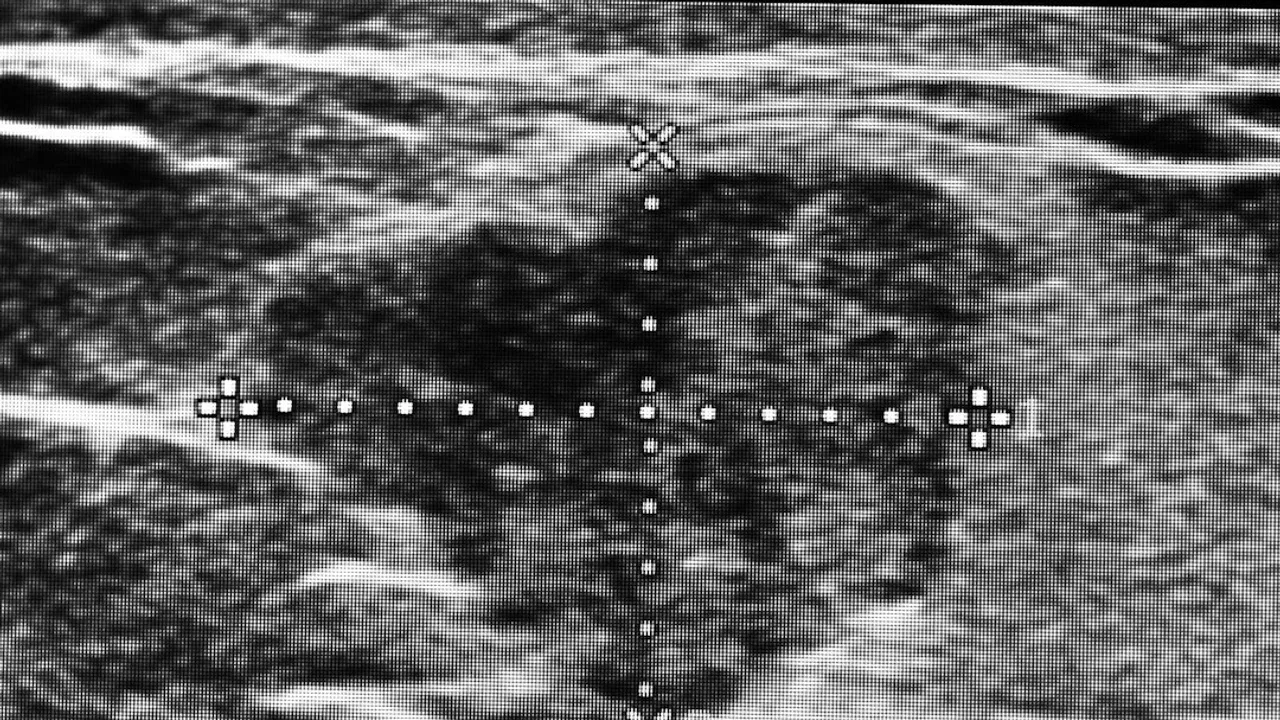
New Ultrasound Technique Detects Early Tendon Changes in Children with Type 1 Diabetes
A new imaging method reveals that the Achilles tendon becomes stiffer in children with type 1 diabetes before any visible thickening occurs. This early detection could help researchers understand how chronic high blood sugar affects connective tissues.
Evidence label explains the kind of source behind this article (for example peer-reviewed literature vs community video). It is not medical advice.
Key takeaways
- Children with type 1 diabetes show increased stiffness in their Achilles tendon—the tissue connecting calf muscle to heel—even when the tendon appears normal in size
- Advanced ultrasound called Shear Wave Elastography (SWE) can detect this stiffness before traditional imaging sees any thickening
- How long someone has had type 1 diabetes appears to predict how much tendon stiffening occurs
- This research helps scientists understand how high blood sugar affects the body's connective tissues over time
What Researchers Studied
Scientists compared the Achilles tendons of 60 children with type 1 diabetes to 60 children without diabetes, all between ages 7 and 16. They used two imaging approaches: standard ultrasound to measure tendon thickness, and an advanced technique called Shear Wave Elastography to measure how stiff the tendon tissue had become.
The researchers also looked at each child's average blood sugar control over time using HbA1c levels, a standard measure of how well diabetes is managed.
What They Found
The Achilles tendons in children with diabetes were not visibly thicker than those in healthy children when measured by standard ultrasound. However, the advanced elastography imaging revealed something important: the tendons in children with diabetes were significantly stiffer than in healthy children.
The stiffness increased measurably—the stiffer tissue showed higher readings on the elastography scale in the diabetes group. Children who had lived with type 1 diabetes longer tended to have stiffer tendons, suggesting that diabetes duration contributes to this change.
Why This Matters
This study demonstrates that chronic high blood sugar affects connective tissues like tendons in ways that advanced imaging can detect before traditional ultrasound sees any physical changes. The findings suggest that tendon stiffening is an early marker of how hyperglycemia (high blood sugar) can gradually alter the body's tissues.
Understanding these microscopic changes may eventually help doctors track long-term complications of type 1 diabetes and test whether better blood sugar control can prevent or slow these tissue changes. However, this research is still in the early observation stage and does not yet indicate clinical treatment approaches.
What This Doesn't Tell Us Yet
This study shows association—that tendon stiffening happens in children with type 1 diabetes—but does not prove whether this stiffening causes any medical problems or affects how children move or function. Further research would be needed to understand the real-world impact of these tissue changes and whether interventions can prevent or reverse them.
Evidence label
Source: European journal of pediatrics. Evidence type: PubMed indexed literature. Type1Cure is an information and intelligence hub, not a medical advice service. This article summarizes published research and does not provide diagnosis, treatment, or personal medical guidance. Always talk to your own care team before changing anything about your Type 1 diabetes management.
Type1Cure is an information and intelligence hub, not a medical advice service. This article summarizes published research and does not provide diagnosis, treatment, or personal medical guidance. Always talk to your own care team before changing anything about your Type 1 diabetes management.
From Type1Cure
Related reading
More evidence-labeled coverage across the Type1Cure library.
- Research summaryCauses & What We KnowPregnant Women with Diabetes Show Higher Rates of Toxoplasma InfectionPubMed indexed literature
- Research summaryCauses & What We KnowExploring Rare Breast Inflammation: What BRCA Mutations and Type 1 Diabetes May SharePubMed indexed literature
- Research summaryCauses & What We KnowUnderstanding Type 1 Diabetes: A Shift Toward Early InterventionPubMed indexed literature
- Research summaryCauses & What We KnowHow Nutrition, Metabolism, and Immunity Connect: What the Lectin Pathway Tells UsPubMed indexed literature
- Research summaryCauses & What We KnowHow Gut Bacteria May Influence the Intestinal Barrier in Type 1 DiabetesPubMed indexed literature
- Research summaryCauses & What We KnowLiver Changes in Cystic Fibrosis: What a New Study FoundPubMed indexed literature